Sciatica is not a diagnosis in itself. It describes pain that travels along the sciatic nerve, from the lower back or buttock down the back of the leg, often past the knee. For desk workers, the seat you sit on can press directly on the painful area, which is why the right chair setup can make such a difference to how the day feels.
This article is general educational information written by the KOS clinical team. It is not a diagnosis or a substitute for advice from your GP, consultant or physiotherapist. If your symptoms are severe, worsening, or include any of the warning signs listed below, seek medical care first.
What causes sciatica?
The sciatic nerve is the largest nerve in the body. It forms from nerve roots leaving the lower spine, runs through the buttock and travels down the back of the thigh before dividing to supply the lower leg and foot. Sciatica happens when one of those roots, or the nerve itself, is compressed or irritated.
| Common cause | What is happening | Who it tends to affect |
|---|---|---|
| Lumbar disc herniation | Disc material presses on or inflames a nerve root. By far the most common cause | Adults roughly 30 to 50; often worse sitting and bending |
| Spinal stenosis | Narrowing of the spaces the nerves pass through | Usually over 60; often worse standing and walking, eased by sitting or leaning forward |
| Spondylolisthesis | One vertebra slips forward on the one below, narrowing the nerve's exit | Varies; sometimes linked to past stress fractures |
| Deep buttock pain syndromes, including piriformis | The nerve is irritated in the buttock rather than the spine | Often aggravated by prolonged sitting on firm surfaces |
Working out which of these is behind your symptoms is a job for your GP or physiotherapist, and it changes which seating works best for you.
Recognising sciatica
- Pain that radiates from the buttock down the back or side of the leg, often worse than the back pain itself
- Burning, shooting or electric-shock sensations
- Tingling, pins and needles or numbness in the leg or foot
- Pain that is worse sitting, coughing, sneezing or straining
- Usually affects one side
Most cases of sciatica improve within weeks to a few months with the right management. Staying active within the limits of your pain is generally better than prolonged rest.
Warning signs that need medical attention first
See your GP promptly if you notice:
- Leg weakness, such as difficulty lifting the front of the foot
- Pain that keeps getting worse, or has not improved after several weeks
- Sciatica with fever, unexplained weight loss or a history of cancer
- Pain in both legs
Go to an emergency department or call 112 / 999 immediately if you have:
- Numbness around the genitals, buttocks or inner thighs
- New difficulty passing urine, or loss of bladder or bowel control
- Weakness or numbness in both legs. These can be signs of cauda equina syndrome
How sitting at a desk aggravates sciatica
| Sitting habit | Why it aggravates sciatica | What to change |
|---|---|---|
| Seat pan too deep | The front edge presses into the back of the thigh, directly over the nerve's path | Adjust seat depth so there is a two-to-three finger gap behind the knee |
| Seat too high, feet dangling | Thigh weight rests on the seat edge, increasing pressure | Lower the seat or add a footrest so the thighs are supported evenly |
| Slumping into a flat lower back | Increases load on the lumbar discs and nerve roots | Backrest and lumbar support that hold the natural curve |
| Wallet or phone in back pocket | Creates a pressure point in the buttock and tilts the pelvis | Empty back pockets before sitting |
| Crossing legs | Tilts the pelvis and compresses the buttock on one side | Feet flat, knees roughly hip-width apart |
| Sitting for hours without moving | Nerves are sensitive to sustained positions | Change position at least every 30 minutes |
Setting up your workstation for sciatica
- Set seat depth first. Sit back fully into the backrest and check the gap between the front of the seat and the back of your knee.
- Support your feet. Feet flat on the floor or a footrest, thighs roughly level, with no pressure line under the thigh.
- Fill the lumbar hollow. Adjust backrest height so the lumbar support sits in the curve of your lower back.
- Try a slight forward tilt or wedge. For many people with disc-related sciatica, opening the hip angle eases the nerve. People with stenosis may prefer the opposite, so be guided by your symptoms.
- Stand and walk regularly. A sit-stand desk lets you change position without breaking concentration.
- Keep the screen straight ahead. Twisting while seated loads the lower back unevenly.
Equipment our physiotherapists often consider for sciatica
Products to discuss at your consultation
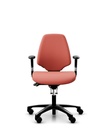
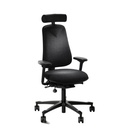
The patented sprung seat spreads load across the buttocks and thighs, reducing pressure points, with an adaptive backrest and forward-tilt function.
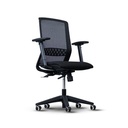
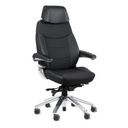
Seat depth adjustment to clear the back of the knee, an adjustable lumbar pump, and a forward-tilt seat for people who find opening the hip angle eases their leg pain.
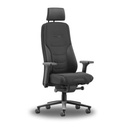
A version of the HM380 with a cut-out at the rear of the seat. Useful where buttock or tailbone pressure is part of the picture.
Supports the feet so the thighs lie level and the seat edge doesn't dig in, while letting you rock the ankles to keep circulation moving.
An 11-degree wedge that tilts the pelvis forward, with a removable cut-out to relieve pressure, portable enough for the car and meeting rooms.
Frequent position changes are one of the most reliable ways to manage sciatica at work, and a desk that moves at the touch of a button removes the effort.
Explore our back care chairs, specialist chairs and footrests.
Why the right product for sciatica is found in a consultation, not a basket
Every product above can help the right person, and none of them helps everyone. Sciatica rarely presents the same way twice: the side, the aggravating posture, your body size, the desk you actually work at and what your physio or consultant has told you all change the answer. Sciatica caused by a disc and sciatica caused by stenosis often respond to opposite postures, and your leg length decides the seat depth and height you need. That is why the most reliable way to choose is to sit down with one of our physiotherapists or clinical ergonomists, recreate how you work, and test options side by side before you spend anything.
Beyond the chair
- Keep moving. Gentle walking is usually one of the best things you can do. Follow the exercises your physiotherapist prescribes, including nerve mobility work.
- Driving. Move the seat close enough that your knee stays slightly bent at full pedal travel, and use a lumbar support on long journeys.
- Sleep. Many people find lying on their side with a pillow between the knees, or on their back with a pillow under the knees, most comfortable.
For employers and H&S managers
If an employee reports sciatica or leg pain, Regulation 72 treats that as a reason to review their workstation. A generic DSE checklist is rarely enough once symptoms are present. A detailed ergonomic assessment with one of our physiotherapists or clinical ergonomists gives you specific, defensible recommendations, and for complex or long-standing cases a workplace needs assessment looks at the whole role. Equipment is then matched to the person, not bought on guesswork.
Related reading
- The complete guide to coccyx and tailbone pain
- 10-minute workstation workout
- How to set up your workstation in five minutes
Sit comfortably again
Book a free showroom consultation in Dublin or Tipperary, or an online consultation, and try chairs, seat supports and sit-stand desks set up for your symptoms.
Frequently asked questions
What is the best chair for sciatica?
Look for adjustable seat depth so the front edge doesn't press into your thigh, good lumbar support, and a seat that spreads pressure evenly. Chairs such as the Malmstolen 4000 and HM380 are often trialled. The right choice depends on the cause of your sciatica and your body size.
Why is my sciatica worse when sitting?
Sitting, particularly slumped, increases load on the lumbar discs, and the seat edge can press on the back of the thigh along the nerve's path. Both can increase nerve irritation.
Should I stand all day if I have sciatica?
Standing all day is not the answer either. The aim is regular change, alternating between sitting, standing and walking. A sit-stand desk makes this practical.
How long does sciatica last?
Most cases improve within weeks to a few months with appropriate management. Persistent, worsening or severe symptoms should be reviewed by your GP.
Does a seat cushion help sciatica?
A well-designed seat wedge or cushion can reduce pressure and improve pelvic position, especially on chairs you can't adjust. A soft, sinking cushion can make things worse by letting the pelvis roll backwards.
Can I test chairs for sciatica before buying?
Yes. Our Dublin and Tipperary showrooms let you trial chairs and supports with a physiotherapist, and we also offer online consultations.
Sciatica is not a diagnosis in itself. It describes pain that travels along the sciatic nerve, from the lower back or buttock down the back of the leg, often past the knee. For desk workers, the seat you sit on can press directly on the painful area, which is why the right chair setup can make such a difference to how the day feels.
This article is general educational information written by the KOS clinical team. It is not a diagnosis or a substitute for advice from your GP, consultant or physiotherapist. If your symptoms are severe, worsening, or include any of the warning signs listed below, seek medical care first.
What causes sciatica?
The sciatic nerve is the largest nerve in the body. It forms from nerve roots leaving the lower spine, runs through the buttock and travels down the back of the thigh before dividing to supply the lower leg and foot. Sciatica happens when one of those roots, or the nerve itself, is compressed or irritated.
| Common cause | What is happening | Who it tends to affect |
|---|---|---|
| Lumbar disc herniation | Disc material presses on or inflames a nerve root. By far the most common cause | Adults roughly 30 to 50; often worse sitting and bending |
| Spinal stenosis | Narrowing of the spaces the nerves pass through | Usually over 60; often worse standing and walking, eased by sitting or leaning forward |
| Spondylolisthesis | One vertebra slips forward on the one below, narrowing the nerve's exit | Varies; sometimes linked to past stress fractures |
| Deep buttock pain syndromes, including piriformis | The nerve is irritated in the buttock rather than the spine | Often aggravated by prolonged sitting on firm surfaces |
Working out which of these is behind your symptoms is a job for your GP or physiotherapist, and it changes which seating works best for you.
Recognising sciatica
- Pain that radiates from the buttock down the back or side of the leg, often worse than the back pain itself
- Burning, shooting or electric-shock sensations
- Tingling, pins and needles or numbness in the leg or foot
- Pain that is worse sitting, coughing, sneezing or straining
- Usually affects one side
Most cases of sciatica improve within weeks to a few months with the right management. Staying active within the limits of your pain is generally better than prolonged rest.
Warning signs that need medical attention first
See your GP promptly if you notice:
- Leg weakness, such as difficulty lifting the front of the foot
- Pain that keeps getting worse, or has not improved after several weeks
- Sciatica with fever, unexplained weight loss or a history of cancer
- Pain in both legs
Go to an emergency department or call 112 / 999 immediately if you have:
- Numbness around the genitals, buttocks or inner thighs
- New difficulty passing urine, or loss of bladder or bowel control
- Weakness or numbness in both legs. These can be signs of cauda equina syndrome
How sitting at a desk aggravates sciatica
| Sitting habit | Why it aggravates sciatica | What to change |
|---|---|---|
| Seat pan too deep | The front edge presses into the back of the thigh, directly over the nerve's path | Adjust seat depth so there is a two-to-three finger gap behind the knee |
| Seat too high, feet dangling | Thigh weight rests on the seat edge, increasing pressure | Lower the seat or add a footrest so the thighs are supported evenly |
| Slumping into a flat lower back | Increases load on the lumbar discs and nerve roots | Backrest and lumbar support that hold the natural curve |
| Wallet or phone in back pocket | Creates a pressure point in the buttock and tilts the pelvis | Empty back pockets before sitting |
| Crossing legs | Tilts the pelvis and compresses the buttock on one side | Feet flat, knees roughly hip-width apart |
| Sitting for hours without moving | Nerves are sensitive to sustained positions | Change position at least every 30 minutes |
Setting up your workstation for sciatica
- Set seat depth first. Sit back fully into the backrest and check the gap between the front of the seat and the back of your knee.
- Support your feet. Feet flat on the floor or a footrest, thighs roughly level, with no pressure line under the thigh.
- Fill the lumbar hollow. Adjust backrest height so the lumbar support sits in the curve of your lower back.
- Try a slight forward tilt or wedge. For many people with disc-related sciatica, opening the hip angle eases the nerve. People with stenosis may prefer the opposite, so be guided by your symptoms.
- Stand and walk regularly. A sit-stand desk lets you change position without breaking concentration.
- Keep the screen straight ahead. Twisting while seated loads the lower back unevenly.
Equipment our physiotherapists often consider for sciatica
Products to discuss at your consultation
The patented sprung seat spreads load across the buttocks and thighs, reducing pressure points, with an adaptive backrest and forward-tilt function.
Seat depth adjustment to clear the back of the knee, an adjustable lumbar pump, and a forward-tilt seat for people who find opening the hip angle eases their leg pain.
A version of the HM380 with a cut-out at the rear of the seat. Useful where buttock or tailbone pressure is part of the picture.
Supports the feet so the thighs lie level and the seat edge doesn't dig in, while letting you rock the ankles to keep circulation moving.
An 11-degree wedge that tilts the pelvis forward, with a removable cut-out to relieve pressure, portable enough for the car and meeting rooms.
Frequent position changes are one of the most reliable ways to manage sciatica at work, and a desk that moves at the touch of a button removes the effort.
Explore our back care chairs, specialist chairs and footrests.
Why the right product for sciatica is found in a consultation, not a basket
Every product above can help the right person, and none of them helps everyone. Sciatica rarely presents the same way twice: the side, the aggravating posture, your body size, the desk you actually work at and what your physio or consultant has told you all change the answer. Sciatica caused by a disc and sciatica caused by stenosis often respond to opposite postures, and your leg length decides the seat depth and height you need. That is why the most reliable way to choose is to sit down with one of our physiotherapists or clinical ergonomists, recreate how you work, and test options side by side before you spend anything.
Beyond the chair
- Keep moving. Gentle walking is usually one of the best things you can do. Follow the exercises your physiotherapist prescribes, including nerve mobility work.
- Driving. Move the seat close enough that your knee stays slightly bent at full pedal travel, and use a lumbar support on long journeys.
- Sleep. Many people find lying on their side with a pillow between the knees, or on their back with a pillow under the knees, most comfortable.
For employers and H&S managers
If an employee reports sciatica or leg pain, Regulation 72 treats that as a reason to review their workstation. A generic DSE checklist is rarely enough once symptoms are present. A detailed ergonomic assessment with one of our physiotherapists or clinical ergonomists gives you specific, defensible recommendations, and for complex or long-standing cases a workplace needs assessment looks at the whole role. Equipment is then matched to the person, not bought on guesswork.
Related reading
- The complete guide to coccyx and tailbone pain
- 10-minute workstation workout
- How to set up your workstation in five minutes
Sit comfortably again
Book a free showroom consultation in Dublin or Tipperary, or an online consultation, and try chairs, seat supports and sit-stand desks set up for your symptoms.
Frequently asked questions
What is the best chair for sciatica?
Look for adjustable seat depth so the front edge doesn't press into your thigh, good lumbar support, and a seat that spreads pressure evenly. Chairs such as the Malmstolen 4000 and HM380 are often trialled. The right choice depends on the cause of your sciatica and your body size.
Why is my sciatica worse when sitting?
Sitting, particularly slumped, increases load on the lumbar discs, and the seat edge can press on the back of the thigh along the nerve's path. Both can increase nerve irritation.
Should I stand all day if I have sciatica?
Standing all day is not the answer either. The aim is regular change, alternating between sitting, standing and walking. A sit-stand desk makes this practical.
How long does sciatica last?
Most cases improve within weeks to a few months with appropriate management. Persistent, worsening or severe symptoms should be reviewed by your GP.
Does a seat cushion help sciatica?
A well-designed seat wedge or cushion can reduce pressure and improve pelvic position, especially on chairs you can't adjust. A soft, sinking cushion can make things worse by letting the pelvis roll backwards.
Can I test chairs for sciatica before buying?
Yes. Our Dublin and Tipperary showrooms let you trial chairs and supports with a physiotherapist, and we also offer online consultations.

 and then Add to Home Screen.