A herniated disc can turn a normal working day into a negotiation with every chair, car seat and meeting. The good news is that most disc herniations settle with time and the right management. The part many people miss is that how you sit for eight hours a day either supports that recovery or works against it.
This article is general educational information written by the KOS clinical team. It is not a diagnosis or a substitute for advice from your GP, consultant or physiotherapist. If your symptoms are severe, worsening, or include any of the warning signs listed below, seek medical care first.
What is a herniated disc?
Between each pair of vertebrae sits an intervertebral disc: a tough fibrous outer ring (the annulus) around a softer, gel-like centre (the nucleus). The discs absorb load and allow the spine to bend and twist.
A herniated disc, often called a slipped, bulging or prolapsed disc, happens when part of the inner material pushes through a weakness in the outer ring. The disc does not actually slip. If the bulge presses on or inflames a nearby nerve root, pain can travel into the buttock and leg (sciatica) or, in the neck, into the shoulder and arm.
Herniations are most common in the lower back, particularly at the L4/L5 and L5/S1 levels, and in the neck at C5/C6 and C6/C7.
| At a glance | |
|---|---|
| Typical symptoms | Back or neck pain; pain, tingling or numbness spreading into the buttock and leg (or shoulder and arm); pain that is worse sitting, bending, coughing or sneezing |
| Common contributors | Age-related disc changes, repeated bending and lifting, prolonged sitting, smoking, higher body weight, and genetics |
| Outlook | Many herniations improve significantly within weeks to a few months with conservative care. Imaging often shows the bulge shrinking over time |
| Usual management | Staying as active as symptoms allow, guided physiotherapy, pain relief as advised by your GP, and in a minority of cases injection or surgery |
Warning signs that need medical attention first
See your GP promptly if you notice:
- Pain that is getting steadily worse rather than settling
- Leg or arm weakness, such as a foot that catches or drags
- Pain with fever, unexplained weight loss or a history of cancer
- Symptoms that have not improved after several weeks
Go to an emergency department or call 112 / 999 immediately if you have:
- Numbness around the genitals, buttocks or inner thighs (saddle area)
- New difficulty passing urine, or loss of bladder or bowel control
- Weakness or numbness in both legs
- New sexual dysfunction alongside back pain. These can indicate cauda equina syndrome, a medical emergency
Why sitting is often the hardest part
Classic spinal studies showed that pressure inside the lumbar discs is typically higher in unsupported sitting than in standing, and highest when you lean forward while seated. Slumping flattens the natural inward curve of the lower back and squeezes the front of the disc, which pushes the nucleus backwards, towards where most herniations occur.
That is why people with a lumbar disc herniation often feel worse after a long meeting or drive and better after walking. It also points to the fixes: support the lumbar curve, open the angle between trunk and thighs, and avoid staying in any one position for too long.
Setting up your workstation for a herniated disc
- Support the lumbar curve. Your backrest should fill the hollow of your lower back. If it doesn't, adjust its height or add a lumbar support.
- Recline slightly. A backrest angle a little behind upright lets the backrest take some of your body weight and reduces disc load compared with sitting bolt upright or leaning forward.
- Hips slightly higher than knees. A seat that is too low tilts the pelvis backwards and flattens the lower back. A forward-tilting seat or seat wedge can help.
- Bring the work to you. Screen at eye level and keyboard close, so you are not leaning forward to reach or read.
- Alternate sitting and standing. Changing position regularly is one of the most effective things you can do. A sit-stand desk makes it effortless.
- Avoid twisting. Put your screen directly in front of you and swivel the whole chair rather than rotating your spine.
- Walk and move. Short walks through the day usually help rather than harm. Follow your physiotherapist's guidance on specific exercises.
Equipment our physiotherapists often consider for disc herniation
Products to discuss at your consultation
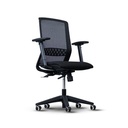
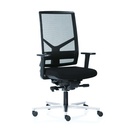
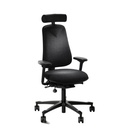
An orthopaedic chair with an adjustable lumbar pump and a forward-tilt function that opens the hip angle, similar in principle to a kneeling chair, while keeping full back support. Its multi-axis mechanism lets you move between upright, reclined and forward-working positions.
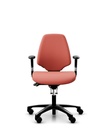
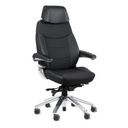
A Swedish back care chair with a sprung seat that distributes pressure and a backrest that adapts to the curve of the spine, with fine adjustment of backrest height and angle.
Lets you change position at the touch of a button, so you can stand when sitting becomes uncomfortable and sit again before fatigue sets in. Memory presets make switching quick enough that you actually do it.
An inflatable lumbar support that adds targeted, adjustable support to a chair that doesn't fit your lower back well, or to a car seat.
A lightweight wedge that tilts the pelvis forward and helps restore the lumbar curve, useful at home, in the car or on chairs you can't adjust.
A saddle-style seat that places the hips higher than the knees and supports perching at a raised desk. Suits some people well, particularly alongside a sit-stand desk, but not everyone, so it is worth trying first.
See our full back care chair range and sit-stand desks.
Why the right product for a herniated disc is found in a consultation, not a basket
Every product above can help the right person, and none of them helps everyone. A herniated disc rarely presents the same way twice: the side, the aggravating posture, your body size, the desk you actually work at and what your physio or consultant has told you all change the answer. Some people with a disc herniation feel immediate relief with a forward-tilting seat; others, depending on the direction of the herniation and their symptoms, find a more reclined position better. Your physio's findings and a hands-on trial tell us which. That is why the most reliable way to choose is to sit down with one of our physiotherapists or clinical ergonomists, recreate how you work, and test options side by side before you spend anything.
Working with a herniated disc: practical tips
- Break up meetings. Stand at the back or take standing breaks during long calls.
- Mind the commute. Car seats are often the worst seats of the day. A lumbar support and seat wedge can make a real difference.
- Lift wisely. Avoid lifting while twisting, and keep loads close. Ask for help with anything awkward while you recover.
- Talk to your employer early. A phased return, flexible hours or temporary duties can prevent a flare and a longer absence.
For employers and H&S managers
If an employee reports back or leg pain from a disc problem, or is returning to work after disc surgery, Regulation 72 treats that as a reason to review their workstation. A generic DSE checklist is rarely enough once symptoms are present. A detailed ergonomic assessment with one of our physiotherapists or clinical ergonomists gives you specific, defensible recommendations, and for complex or long-standing cases a workplace needs assessment looks at the whole role. Equipment is then matched to the person, not bought on guesswork.
Related reading
- How to set up your workstation properly in five minutes
- 10-minute workstation workout
- Preventing workplace pain: 10 tips to stay mobile
Find the chair that suits your back, not someone else's
Book a free showroom consultation in Dublin or Tipperary, or an online consultation, and trial back care chairs and sit-stand options with one of our physiotherapists.
Frequently asked questions
What is the best office chair for a herniated disc?
The best chair is one that supports your lumbar curve, allows a slightly reclined backrest, lets your hips sit slightly higher than your knees, and adjusts to your body. Chairs such as the HM380 and Malmstolen 4000 are frequently used, but the right choice depends on your symptoms and measurements, so a trial is strongly recommended.
Is sitting or standing better for a herniated disc?
Neither is best all day. Many people with lumbar disc herniation find sitting, especially slumped or leaning forward, more aggravating than standing or walking. The most helpful approach is regular change of position, which a sit-stand desk makes easy.
Can I work with a herniated disc?
Many people continue working, sometimes with adjustments such as a modified workstation, more frequent breaks or a phased return. Follow the advice of your GP or physiotherapist, and ask your employer for a workstation review.
Does a lumbar support help a herniated disc?
A lumbar support can help maintain the natural inward curve of the lower back when sitting, which reduces load on the discs for many people. It should fit the hollow of your back without pushing you forward.
Are kneeling or saddle chairs good for disc problems?
They open the angle between trunk and thighs, which some people with disc problems find comfortable. They are not suitable for everyone, particularly those with knee problems, and are best tried in a consultation before buying.
What symptoms mean I need urgent help?
Numbness in the saddle area, new bladder or bowel problems, weakness or numbness in both legs, or new sexual dysfunction alongside back pain can indicate cauda equina syndrome. Go to an emergency department immediately.
A herniated disc can turn a normal working day into a negotiation with every chair, car seat and meeting. The good news is that most disc herniations settle with time and the right management. The part many people miss is that how you sit for eight hours a day either supports that recovery or works against it.
This article is general educational information written by the KOS clinical team. It is not a diagnosis or a substitute for advice from your GP, consultant or physiotherapist. If your symptoms are severe, worsening, or include any of the warning signs listed below, seek medical care first.
What is a herniated disc?
Between each pair of vertebrae sits an intervertebral disc: a tough fibrous outer ring (the annulus) around a softer, gel-like centre (the nucleus). The discs absorb load and allow the spine to bend and twist.
A herniated disc, often called a slipped, bulging or prolapsed disc, happens when part of the inner material pushes through a weakness in the outer ring. The disc does not actually slip. If the bulge presses on or inflames a nearby nerve root, pain can travel into the buttock and leg (sciatica) or, in the neck, into the shoulder and arm.
Herniations are most common in the lower back, particularly at the L4/L5 and L5/S1 levels, and in the neck at C5/C6 and C6/C7.
| At a glance | |
|---|---|
| Typical symptoms | Back or neck pain; pain, tingling or numbness spreading into the buttock and leg (or shoulder and arm); pain that is worse sitting, bending, coughing or sneezing |
| Common contributors | Age-related disc changes, repeated bending and lifting, prolonged sitting, smoking, higher body weight, and genetics |
| Outlook | Many herniations improve significantly within weeks to a few months with conservative care. Imaging often shows the bulge shrinking over time |
| Usual management | Staying as active as symptoms allow, guided physiotherapy, pain relief as advised by your GP, and in a minority of cases injection or surgery |
Warning signs that need medical attention first
See your GP promptly if you notice:
- Pain that is getting steadily worse rather than settling
- Leg or arm weakness, such as a foot that catches or drags
- Pain with fever, unexplained weight loss or a history of cancer
- Symptoms that have not improved after several weeks
Go to an emergency department or call 112 / 999 immediately if you have:
- Numbness around the genitals, buttocks or inner thighs (saddle area)
- New difficulty passing urine, or loss of bladder or bowel control
- Weakness or numbness in both legs
- New sexual dysfunction alongside back pain. These can indicate cauda equina syndrome, a medical emergency
Why sitting is often the hardest part
Classic spinal studies showed that pressure inside the lumbar discs is typically higher in unsupported sitting than in standing, and highest when you lean forward while seated. Slumping flattens the natural inward curve of the lower back and squeezes the front of the disc, which pushes the nucleus backwards, towards where most herniations occur.
That is why people with a lumbar disc herniation often feel worse after a long meeting or drive and better after walking. It also points to the fixes: support the lumbar curve, open the angle between trunk and thighs, and avoid staying in any one position for too long.
Setting up your workstation for a herniated disc
- Support the lumbar curve. Your backrest should fill the hollow of your lower back. If it doesn't, adjust its height or add a lumbar support.
- Recline slightly. A backrest angle a little behind upright lets the backrest take some of your body weight and reduces disc load compared with sitting bolt upright or leaning forward.
- Hips slightly higher than knees. A seat that is too low tilts the pelvis backwards and flattens the lower back. A forward-tilting seat or seat wedge can help.
- Bring the work to you. Screen at eye level and keyboard close, so you are not leaning forward to reach or read.
- Alternate sitting and standing. Changing position regularly is one of the most effective things you can do. A sit-stand desk makes it effortless.
- Avoid twisting. Put your screen directly in front of you and swivel the whole chair rather than rotating your spine.
- Walk and move. Short walks through the day usually help rather than harm. Follow your physiotherapist's guidance on specific exercises.
Equipment our physiotherapists often consider for disc herniation
Products to discuss at your consultation
An orthopaedic chair with an adjustable lumbar pump and a forward-tilt function that opens the hip angle, similar in principle to a kneeling chair, while keeping full back support. Its multi-axis mechanism lets you move between upright, reclined and forward-working positions.
A Swedish back care chair with a sprung seat that distributes pressure and a backrest that adapts to the curve of the spine, with fine adjustment of backrest height and angle.
Lets you change position at the touch of a button, so you can stand when sitting becomes uncomfortable and sit again before fatigue sets in. Memory presets make switching quick enough that you actually do it.
An inflatable lumbar support that adds targeted, adjustable support to a chair that doesn't fit your lower back well, or to a car seat.
A lightweight wedge that tilts the pelvis forward and helps restore the lumbar curve, useful at home, in the car or on chairs you can't adjust.
A saddle-style seat that places the hips higher than the knees and supports perching at a raised desk. Suits some people well, particularly alongside a sit-stand desk, but not everyone, so it is worth trying first.
See our full back care chair range and sit-stand desks.
Why the right product for a herniated disc is found in a consultation, not a basket
Every product above can help the right person, and none of them helps everyone. A herniated disc rarely presents the same way twice: the side, the aggravating posture, your body size, the desk you actually work at and what your physio or consultant has told you all change the answer. Some people with a disc herniation feel immediate relief with a forward-tilting seat; others, depending on the direction of the herniation and their symptoms, find a more reclined position better. Your physio's findings and a hands-on trial tell us which. That is why the most reliable way to choose is to sit down with one of our physiotherapists or clinical ergonomists, recreate how you work, and test options side by side before you spend anything.
Working with a herniated disc: practical tips
- Break up meetings. Stand at the back or take standing breaks during long calls.
- Mind the commute. Car seats are often the worst seats of the day. A lumbar support and seat wedge can make a real difference.
- Lift wisely. Avoid lifting while twisting, and keep loads close. Ask for help with anything awkward while you recover.
- Talk to your employer early. A phased return, flexible hours or temporary duties can prevent a flare and a longer absence.
For employers and H&S managers
If an employee reports back or leg pain from a disc problem, or is returning to work after disc surgery, Regulation 72 treats that as a reason to review their workstation. A generic DSE checklist is rarely enough once symptoms are present. A detailed ergonomic assessment with one of our physiotherapists or clinical ergonomists gives you specific, defensible recommendations, and for complex or long-standing cases a workplace needs assessment looks at the whole role. Equipment is then matched to the person, not bought on guesswork.
Related reading
- How to set up your workstation properly in five minutes
- 10-minute workstation workout
- Preventing workplace pain: 10 tips to stay mobile
Find the chair that suits your back, not someone else's
Book a free showroom consultation in Dublin or Tipperary, or an online consultation, and trial back care chairs and sit-stand options with one of our physiotherapists.
Frequently asked questions
What is the best office chair for a herniated disc?
The best chair is one that supports your lumbar curve, allows a slightly reclined backrest, lets your hips sit slightly higher than your knees, and adjusts to your body. Chairs such as the HM380 and Malmstolen 4000 are frequently used, but the right choice depends on your symptoms and measurements, so a trial is strongly recommended.
Is sitting or standing better for a herniated disc?
Neither is best all day. Many people with lumbar disc herniation find sitting, especially slumped or leaning forward, more aggravating than standing or walking. The most helpful approach is regular change of position, which a sit-stand desk makes easy.
Can I work with a herniated disc?
Many people continue working, sometimes with adjustments such as a modified workstation, more frequent breaks or a phased return. Follow the advice of your GP or physiotherapist, and ask your employer for a workstation review.
Does a lumbar support help a herniated disc?
A lumbar support can help maintain the natural inward curve of the lower back when sitting, which reduces load on the discs for many people. It should fit the hollow of your back without pushing you forward.
Are kneeling or saddle chairs good for disc problems?
They open the angle between trunk and thighs, which some people with disc problems find comfortable. They are not suitable for everyone, particularly those with knee problems, and are best tried in a consultation before buying.
What symptoms mean I need urgent help?
Numbness in the saddle area, new bladder or bowel problems, weakness or numbness in both legs, or new sexual dysfunction alongside back pain can indicate cauda equina syndrome. Go to an emergency department immediately.

 and then Add to Home Screen.