Carpal tunnel syndrome is one of the most common reasons people come to our showrooms with hand pain. The tingling, numbness and night-time waking are caused by pressure on a single nerve at the wrist, and while a keyboard and mouse are rarely the only cause, the way you use them can make symptoms noticeably better or worse.
This article is general educational information written by the KOS clinical team. It is not a diagnosis or a substitute for advice from your GP, consultant or physiotherapist. If your symptoms are severe, worsening, or include any of the warning signs listed below, seek medical care first.
What is carpal tunnel syndrome?
The carpal tunnel is a narrow passage on the palm side of the wrist, formed by the small wrist bones and a tough ligament across the top. Nine tendons and the median nerve pass through it. The median nerve supplies feeling to the thumb, index, middle and half of the ring finger, and powers some of the small thumb muscles.
When the space inside the tunnel is reduced, or the tissues within it swell, the nerve is compressed. The result is carpal tunnel syndrome (CTS).
| At a glance | |
|---|---|
| Typical symptoms | Tingling, pins and needles or numbness in the thumb, index and middle fingers; aching in the hand or forearm; waking at night and shaking the hand to relieve it; clumsiness or dropping things |
| Usually spared | The little finger, which is supplied by a different nerve |
| Common risk factors | Pregnancy, diabetes, underactive thyroid, rheumatoid arthritis, higher body weight, previous wrist fracture, family history, and repetitive or forceful gripping with the wrist bent |
| How it is diagnosed | Clinical examination by a GP or physiotherapist, sometimes confirmed with nerve conduction studies |
| Usual treatments | Activity modification, night wrist splints, targeted exercises, steroid injection, and surgical release for persistent or severe cases |
Warning signs that need medical attention first
See your GP promptly if you notice:
- Numbness that is constant rather than coming and going
- Weakness in the thumb, or dropping things more often
- Visible thinning of the muscle at the base of the thumb
- Symptoms in both hands, or spreading up the arm or into the neck
- Symptoms that started after an injury
Does computer work cause carpal tunnel syndrome?
The honest answer is that the research is mixed. Strong links exist between CTS and forceful, repetitive hand work combined with vibration, such as some industrial and assembly roles. The link with ordinary office keyboard use is weaker and still debated.
What is well established is that certain wrist positions raise the pressure inside the carpal tunnel. Bending the wrist back (extension) or forward (flexion), and resting the base of the palm on a hard edge, both increase pressure on the nerve. So even if your desk did not cause your CTS, a poor setup can keep irritating it every working hour, while a good one can take load off the nerve and give treatment a better chance of working.
How a typical desk setup aggravates CTS
| What we often see | What it does to the wrist | What helps |
|---|---|---|
| Keyboard feet flipped up | Tilts the wrist back into extension while typing | Flat or slightly negative-tilt keyboard; low-profile design |
| Standard flat mouse gripped tightly | Wrist extension plus forearm rotation and sustained grip | Vertical or central pointing device with a relaxed hand |
| Resting the heel of the hand on the desk edge | Direct pressure over the carpal tunnel | Soft support under the palm or forearm, used during pauses rather than while typing |
| Chair too low for the desk | Wrists bend upward to reach the keys | Raise the chair so elbows are at or slightly above desk height, with a footrest if feet no longer reach the floor |
| Laptop used on its own | Cramped hands, wrists bent, shoulders tense | Laptop stand with separate keyboard and mouse |
| Mouse far out to the side | Wrist deviates sideways; grip tightens to control it | Mouse close to the body, or centred in front of the keyboard |
Setting up your workstation for carpal tunnel syndrome
- Chair first. Adjust seat height so your forearms are roughly horizontal and your wrists are straight when your fingers rest on the keys. Use a footrest if your feet lose contact with the floor.
- Keyboard flat and close. Fold the keyboard feet away. Keep it close enough that your elbows stay by your sides.
- Neutral wrists. Aim for a straight line from forearm through wrist to knuckles, with no upward bend and no sideways kink.
- Light touch. Type and click softly. A tight grip on the mouse is one of the most common aggravating habits we see.
- Support in the pauses. Rest your palms or forearms on a soft support when you stop typing, not while your fingers are working.
- Switch hands and tools. Learn keyboard shortcuts, use dictation for long documents, and consider mousing with the other hand for part of the day.
- Break often. Short, frequent pauses to open and relax the hands are more useful than one long break.
Equipment our physiotherapists often consider for carpal tunnel syndrome
These are the products we most often trial with people who have CTS. Which one suits you depends on your hand size, how you work, the severity of your symptoms and what your clinician has advised.
Products to discuss at your consultation
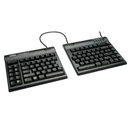
A flat, low-profile split keyboard that avoids the upward wrist bend of a standard keyboard. The halves can be separated so wrists stay straight rather than angled outwards.
Add the VIP3 tenting kit if you also need to reduce forearm rotation.
Ultra-thin split layout with a break reminder light that encourages regular pauses, useful if you tend to type for long stretches without stopping.
Holds the hand in a handshake position, reducing forearm twist and allowing a softer grip. Also available as a left-handed version.
Replaces the mouse with a control bar centred in front of the keyboard, so neither hand has to grip or reach. Either hand can control it, which lets you share the load.
A vertical mouse offered in small, regular and large, so the grip can be matched to your hand, with an integrated break reminder.
A memory foam support that cushions the heel of the hand during pauses and stops you resting on a hard desk edge.
Browse the full RSI and wrist pain range or our vertical mice and MouseTrapper range.
Why the right product for carpal tunnel syndrome is found in a consultation, not a basket
Every product above can help the right person, and none of them helps everyone. Carpal tunnel syndrome rarely presents the same way twice: the side, the aggravating posture, your body size, the desk you actually work at and what your physio or consultant has told you all change the answer. A vertical mouse that is ideal for one person's hand size can force another person's wrist into more extension, and a split keyboard needs to be set up to your shoulder width to help at all. That is why the most reliable way to choose is to sit down with one of our physiotherapists or clinical ergonomists, recreate how you work, and test options side by side before you spend anything.
Habits that support recovery
- Nights matter. Many people sleep with wrists curled, which is why symptoms peak at night. A neutral wrist splint at night, if your GP or physio recommends one, often helps more than anything done during the day.
- Nerve and tendon gliding exercises taught by a physiotherapist can help the nerve move more freely.
- Look at the rest of your day. Phone scrolling, gaming, driving grip and hobbies such as knitting or cycling all add to the same load.
- Manage related health factors such as blood sugar and thyroid function with your GP.
For employers and H&S managers
If an employee reports hand numbness or wrist pain, Regulation 72 treats that as a reason to review their workstation. A generic DSE checklist is rarely enough once symptoms are present. A detailed ergonomic assessment with one of our physiotherapists or clinical ergonomists gives you specific, defensible recommendations, and for complex or long-standing cases a workplace needs assessment looks at the whole role. Equipment is then matched to the person, not bought on guesswork.
Related reading
- RSI prevention: five tips for computer and mouse users
- Trigger finger: the complete guide
- How to set up your workstation in five minutes
Try before you commit
Book a free showroom consultation in Dublin or Tipperary, or an online consultation, and test keyboards and mice set up for your hands with one of our physiotherapists.
Frequently asked questions
What is the best keyboard for carpal tunnel syndrome?
There is no single best keyboard. Most people with CTS benefit from a flat or low-profile design that keeps the wrist straight, and many benefit from a split layout such as the Kinesis Freestyle2. The right choice depends on your shoulder width, hand size and typing style, which is why we recommend trying options in a consultation.
Is a vertical mouse good for carpal tunnel?
For many people, yes. A vertical mouse reduces forearm rotation and allows a looser grip. However, the size must match your hand; a poorly fitted vertical mouse can increase wrist extension. Central pointing devices such as the MouseTrapper are an alternative that removes gripping altogether.
Should I use a wrist rest while typing?
Use it for resting during pauses rather than while actively typing. Pressing the heel of the hand into any support while your fingers are moving can increase pressure over the carpal tunnel.
Can carpal tunnel syndrome go away on its own?
Mild cases, including those linked to pregnancy, often improve with time, splinting and changes to activity. Persistent, constant or severe symptoms, especially with weakness or muscle wasting, need medical assessment because prolonged nerve compression can cause lasting damage.
Is my employer responsible for providing equipment for carpal tunnel syndrome?
If a DSE assessment identifies that specific equipment is needed to control a risk at your workstation, your employer is responsible for providing it. Reporting your symptoms should trigger a review of your workstation.
Can I try carpal tunnel products before buying?
Yes. You can test our keyboards, mice and central pointing devices at our Dublin or Tipperary showrooms, or see them demonstrated in an online consultation.
Carpal tunnel syndrome is one of the most common reasons people come to our showrooms with hand pain. The tingling, numbness and night-time waking are caused by pressure on a single nerve at the wrist, and while a keyboard and mouse are rarely the only cause, the way you use them can make symptoms noticeably better or worse.
This article is general educational information written by the KOS clinical team. It is not a diagnosis or a substitute for advice from your GP, consultant or physiotherapist. If your symptoms are severe, worsening, or include any of the warning signs listed below, seek medical care first.
What is carpal tunnel syndrome?
The carpal tunnel is a narrow passage on the palm side of the wrist, formed by the small wrist bones and a tough ligament across the top. Nine tendons and the median nerve pass through it. The median nerve supplies feeling to the thumb, index, middle and half of the ring finger, and powers some of the small thumb muscles.
When the space inside the tunnel is reduced, or the tissues within it swell, the nerve is compressed. The result is carpal tunnel syndrome (CTS).
| At a glance | |
|---|---|
| Typical symptoms | Tingling, pins and needles or numbness in the thumb, index and middle fingers; aching in the hand or forearm; waking at night and shaking the hand to relieve it; clumsiness or dropping things |
| Usually spared | The little finger, which is supplied by a different nerve |
| Common risk factors | Pregnancy, diabetes, underactive thyroid, rheumatoid arthritis, higher body weight, previous wrist fracture, family history, and repetitive or forceful gripping with the wrist bent |
| How it is diagnosed | Clinical examination by a GP or physiotherapist, sometimes confirmed with nerve conduction studies |
| Usual treatments | Activity modification, night wrist splints, targeted exercises, steroid injection, and surgical release for persistent or severe cases |
Warning signs that need medical attention first
See your GP promptly if you notice:
- Numbness that is constant rather than coming and going
- Weakness in the thumb, or dropping things more often
- Visible thinning of the muscle at the base of the thumb
- Symptoms in both hands, or spreading up the arm or into the neck
- Symptoms that started after an injury
Does computer work cause carpal tunnel syndrome?
The honest answer is that the research is mixed. Strong links exist between CTS and forceful, repetitive hand work combined with vibration, such as some industrial and assembly roles. The link with ordinary office keyboard use is weaker and still debated.
What is well established is that certain wrist positions raise the pressure inside the carpal tunnel. Bending the wrist back (extension) or forward (flexion), and resting the base of the palm on a hard edge, both increase pressure on the nerve. So even if your desk did not cause your CTS, a poor setup can keep irritating it every working hour, while a good one can take load off the nerve and give treatment a better chance of working.
How a typical desk setup aggravates CTS
| What we often see | What it does to the wrist | What helps |
|---|---|---|
| Keyboard feet flipped up | Tilts the wrist back into extension while typing | Flat or slightly negative-tilt keyboard; low-profile design |
| Standard flat mouse gripped tightly | Wrist extension plus forearm rotation and sustained grip | Vertical or central pointing device with a relaxed hand |
| Resting the heel of the hand on the desk edge | Direct pressure over the carpal tunnel | Soft support under the palm or forearm, used during pauses rather than while typing |
| Chair too low for the desk | Wrists bend upward to reach the keys | Raise the chair so elbows are at or slightly above desk height, with a footrest if feet no longer reach the floor |
| Laptop used on its own | Cramped hands, wrists bent, shoulders tense | Laptop stand with separate keyboard and mouse |
| Mouse far out to the side | Wrist deviates sideways; grip tightens to control it | Mouse close to the body, or centred in front of the keyboard |
Setting up your workstation for carpal tunnel syndrome
- Chair first. Adjust seat height so your forearms are roughly horizontal and your wrists are straight when your fingers rest on the keys. Use a footrest if your feet lose contact with the floor.
- Keyboard flat and close. Fold the keyboard feet away. Keep it close enough that your elbows stay by your sides.
- Neutral wrists. Aim for a straight line from forearm through wrist to knuckles, with no upward bend and no sideways kink.
- Light touch. Type and click softly. A tight grip on the mouse is one of the most common aggravating habits we see.
- Support in the pauses. Rest your palms or forearms on a soft support when you stop typing, not while your fingers are working.
- Switch hands and tools. Learn keyboard shortcuts, use dictation for long documents, and consider mousing with the other hand for part of the day.
- Break often. Short, frequent pauses to open and relax the hands are more useful than one long break.
Equipment our physiotherapists often consider for carpal tunnel syndrome
These are the products we most often trial with people who have CTS. Which one suits you depends on your hand size, how you work, the severity of your symptoms and what your clinician has advised.
Products to discuss at your consultation
A flat, low-profile split keyboard that avoids the upward wrist bend of a standard keyboard. The halves can be separated so wrists stay straight rather than angled outwards.
Add the VIP3 tenting kit if you also need to reduce forearm rotation.
Ultra-thin split layout with a break reminder light that encourages regular pauses, useful if you tend to type for long stretches without stopping.
Holds the hand in a handshake position, reducing forearm twist and allowing a softer grip. Also available as a left-handed version.
Replaces the mouse with a control bar centred in front of the keyboard, so neither hand has to grip or reach. Either hand can control it, which lets you share the load.
A vertical mouse offered in small, regular and large, so the grip can be matched to your hand, with an integrated break reminder.
A memory foam support that cushions the heel of the hand during pauses and stops you resting on a hard desk edge.
Browse the full RSI and wrist pain range or our vertical mice and MouseTrapper range.
Why the right product for carpal tunnel syndrome is found in a consultation, not a basket
Every product above can help the right person, and none of them helps everyone. Carpal tunnel syndrome rarely presents the same way twice: the side, the aggravating posture, your body size, the desk you actually work at and what your physio or consultant has told you all change the answer. A vertical mouse that is ideal for one person's hand size can force another person's wrist into more extension, and a split keyboard needs to be set up to your shoulder width to help at all. That is why the most reliable way to choose is to sit down with one of our physiotherapists or clinical ergonomists, recreate how you work, and test options side by side before you spend anything.
Habits that support recovery
- Nights matter. Many people sleep with wrists curled, which is why symptoms peak at night. A neutral wrist splint at night, if your GP or physio recommends one, often helps more than anything done during the day.
- Nerve and tendon gliding exercises taught by a physiotherapist can help the nerve move more freely.
- Look at the rest of your day. Phone scrolling, gaming, driving grip and hobbies such as knitting or cycling all add to the same load.
- Manage related health factors such as blood sugar and thyroid function with your GP.
For employers and H&S managers
If an employee reports hand numbness or wrist pain, Regulation 72 treats that as a reason to review their workstation. A generic DSE checklist is rarely enough once symptoms are present. A detailed ergonomic assessment with one of our physiotherapists or clinical ergonomists gives you specific, defensible recommendations, and for complex or long-standing cases a workplace needs assessment looks at the whole role. Equipment is then matched to the person, not bought on guesswork.
Related reading
- RSI prevention: five tips for computer and mouse users
- Trigger finger: the complete guide
- How to set up your workstation in five minutes
Try before you commit
Book a free showroom consultation in Dublin or Tipperary, or an online consultation, and test keyboards and mice set up for your hands with one of our physiotherapists.
Frequently asked questions
What is the best keyboard for carpal tunnel syndrome?
There is no single best keyboard. Most people with CTS benefit from a flat or low-profile design that keeps the wrist straight, and many benefit from a split layout such as the Kinesis Freestyle2. The right choice depends on your shoulder width, hand size and typing style, which is why we recommend trying options in a consultation.
Is a vertical mouse good for carpal tunnel?
For many people, yes. A vertical mouse reduces forearm rotation and allows a looser grip. However, the size must match your hand; a poorly fitted vertical mouse can increase wrist extension. Central pointing devices such as the MouseTrapper are an alternative that removes gripping altogether.
Should I use a wrist rest while typing?
Use it for resting during pauses rather than while actively typing. Pressing the heel of the hand into any support while your fingers are moving can increase pressure over the carpal tunnel.
Can carpal tunnel syndrome go away on its own?
Mild cases, including those linked to pregnancy, often improve with time, splinting and changes to activity. Persistent, constant or severe symptoms, especially with weakness or muscle wasting, need medical assessment because prolonged nerve compression can cause lasting damage.
Is my employer responsible for providing equipment for carpal tunnel syndrome?
If a DSE assessment identifies that specific equipment is needed to control a risk at your workstation, your employer is responsible for providing it. Reporting your symptoms should trigger a review of your workstation.
Can I try carpal tunnel products before buying?
Yes. You can test our keyboards, mice and central pointing devices at our Dublin or Tipperary showrooms, or see them demonstrated in an online consultation.

 and then Add to Home Screen.