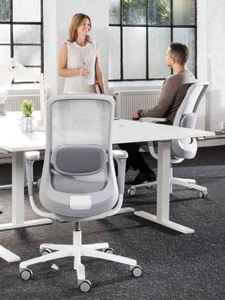
If you manage Environmental, Health, and Safety (EHS) for an Irish office-based workforce, you have probably already ticked the basic compliance box: someone, somewhere, has conducted a DSE assessment for most of your team. The harder question is whether that activity actually adds up to a robust program—one that would hold up if tested by an HSA inspector, a solicitor, or simply an employee whose back pain hasn't resolved six months after their "assessment."
This guide bridges that gap. We are moving past the basic "what is DSE training" and focusing on how an EHS team should plan the strategic move from foundational DSE competence to the advanced, defensible capability that a mature ergonomics program actually requires.
What Irish Law Actually Requires From Your EHS Team
Two pieces of legislation do the heavy lifting here, and it is worth being precise about what each one demands of your organization.
Section 18 of the Safety, Health and Welfare at Work Act 2005 requires employers to appoint one or more "competent persons" for protective and preventative functions. Competence is not defined by a certificate alone—it is a combination of training, knowledge, and experience appropriate to the task. Appointing an employee to run DSE assessments after a single short course, with no experience and no defined escalation path, is a legally precarious position.
Furthermore, Chapter 5 of Part 2 of the Safety, Health and Welfare at Work (General Application) Regulations 2007 sets out specific DSE duties—workstation analysis, minimum equipment requirements (Schedule 4), and employer obligations regarding eyesight tests and breaks.
The practical takeaway for EHS managers: The HSA’s regulations tell you what has to happen. They do not tell you who is competent enough to make it happen—that judgment call sits entirely with you.
Why a Training Certificate Isn't a Compliant Programme
Here is the distinction that trips up many well-run EHS functions: An assessment report is evidence that an activity took place. It is not, on its own, evidence that the assessment was suitable, that the assessor was competent for the complexity of the medical case, or that the recommendations were ever implemented.
Put simply, the assessment isn't the compliance. The close-out is. If an employee was assessed and given three equipment recommendations, but none were actioned, you do not have a compliant program. You have a paper trail that will work against you if that case is escalated. This is why "how many people have completed the course" is the wrong KPI for an EHS-run DSE program.
Demonstrating ROI: Want to prove the value of moving beyond basic checklists? Read our guide on Building Safer Workplaces: 7 Benefits of Adding a DSE Assessor to Your Organisation to see how dedicated assessors drive actual compliance and reduce absenteeism.
Mapping the DSE Assessor Pathway: Level 1 to Level 2
For most EHS teams, a sensible, legally defensible structure involves clear, tiered training pathways:
- Level 1 (Foundation): This is where assessors learn statutory requirements, standard setup, and how to run a straightforward assessment within a low-risk scope. It is the starting point for HR generalists, department leads, or junior EHS members.
- Level 2 (Advanced Assessor): This is where the EHS-specific value sits. Level 2 covers complex cases, medically-graded equipment selection, and the anatomical knowledge needed to handle situations Level 1 explicitly isn't designed for—such as persistent pain, pre-existing conditions, and non-standard setups.
- DSE Compliant Remote Assessor Course: Essential for teams managing hybrid or 100% remote workforces, teaching your assessors how to accurately identify risks via video link in domestic environments.
This distinction matters because scope creep is a massive liability. A Level 1-trained assessor working outside their competency boundary on a complex medical case is often a bigger risk than having no internal assessor at all. Level 2 exists to give EHS teams a trained, defensible escalation tier.
Establishing the Baseline: Before you escalate to Level 2, ensure your foundation is solid. Learn How to Train Up Your Own In-House DSE Assessors for everyday volume.
Where Internal Programmes Commonly Break Down
Having trained and assessed thousands of internal assessors, we see the same preventable failure patterns repeatedly:
- No Defined Framework: Assessors without clear escalation boundaries make inconsistent, ad hoc calls. A course teaches methodology; a framework dictates how it is applied in your specific organization.
- Training Without Time: Section 18 requires employers to give competent persons "adequate time and means." An assessor with a certificate but no allocated hours to actually do the job is a compliance gap, not an asset.
- Confidence Drift: Assessors who do not perform audits regularly lose the skill rapidly—especially for remote assessments, which are inherently more difficult.
- Recommendations Without Ownership: The most common driver of MSK claims is an assessment that correctly identified a risk, but sat unactioned because no one owned the follow-through.
Building an EHS-Led Programme That Holds Up
A well-structured program typically relies on three distinct roles: A Programme Owner (usually EHS) who holds accountability for the close-out rate; Assessors working within a strict, approved scope; and Ergonomics Champions who handle day-to-day setup queries before they require formal intervention.
Musculoskeletal discomfort is prevalent enough that this structure earns its keep quickly. Relying on a single generalist for every case—from a new starter's monitor height to a complex return-to-work scenario—is not a sustainable model.
Translating Audits to Action: A complex case requires specialized solutions. Read our breakdown on Making Informed Recommendations Post-Ergonomic Assessment to ensure your Level 2 assessors prescribe the correct interventions.
Measuring the Impact: KPIs Worth Tracking
Once the program is running, abandon "number of staff trained" as your primary metric. Instead, track the numbers that prove your program functions:
- Assessment Booking Time: How long between a request being flagged and the assessment occurring.
- Case Close-Out Time: The duration between the assessment and the physical implementation of the recommendations.
- Repeat-Referral Rate: Cases where an employee needs a second look—often flagging an assessor working outside their competence.
- Resolution Using Existing Equipment: The proportion of cases solved purely through postural education and adjustment rather than new expenditure.
- QA Audit Pass Rate: Spot-checking reports against your clinical framework, not just verifying they exist.
FAQs for EHS Teams Planning DSE Training
Does every EHS team member need to be a certified DSE assessor?
Not necessarily. The law requires the designated competent person to have appropriate training. In practice, EHS functions are better served by a small, highly trained cohort (Level 1 for volume, Level 2 for escalations) rather than giving everyone a certificate they rarely use.
When should an EHS team move from Level 1 to Level 2?
When your Level 1 assessors regularly hit the edge of their scope—facing medical cases, complex equipment requests, or persistent employee discomfort after a baseline assessment. If escalations are becoming routine, it is time to invest in Level 2.
What happens if an internal assessor's recommendation is never actioned?
From a compliance standpoint, an unactioned recommendation is a massive liability. It proves the employer had documented knowledge of a hazard but failed to control it. Ownership of the close-out must sit clearly with a program manager.
Elevate Your EHS Team’s Capability
The cost of under-investing in assessor capability shows up in slow-moving cases, frustrated employees, and weak documentation that crumbles under audit. Take your EHS team from foundational competence to advanced, defensible authority.
If you manage Environmental, Health, and Safety (EHS) for an Irish office-based workforce, you have probably already ticked the basic compliance box: someone, somewhere, has conducted a DSE assessment for most of your team. The harder question is whether that activity actually adds up to a robust program—one that would hold up if tested by an HSA inspector, a solicitor, or simply an employee whose back pain hasn't resolved six months after their "assessment."
This guide bridges that gap. We are moving past the basic "what is DSE training" and focusing on how an EHS team should plan the strategic move from foundational DSE competence to the advanced, defensible capability that a mature ergonomics program actually requires.
What Irish Law Actually Requires From Your EHS Team
Two pieces of legislation do the heavy lifting here, and it is worth being precise about what each one demands of your organization.
Section 18 of the Safety, Health and Welfare at Work Act 2005 requires employers to appoint one or more "competent persons" for protective and preventative functions. Competence is not defined by a certificate alone—it is a combination of training, knowledge, and experience appropriate to the task. Appointing an employee to run DSE assessments after a single short course, with no experience and no defined escalation path, is a legally precarious position.
Furthermore, Chapter 5 of Part 2 of the Safety, Health and Welfare at Work (General Application) Regulations 2007 sets out specific DSE duties—workstation analysis, minimum equipment requirements (Schedule 4), and employer obligations regarding eyesight tests and breaks.
The practical takeaway for EHS managers: The HSA’s regulations tell you what has to happen. They do not tell you who is competent enough to make it happen—that judgment call sits entirely with you.
Why a Training Certificate Isn't a Compliant Programme
Here is the distinction that trips up many well-run EHS functions: An assessment report is evidence that an activity took place. It is not, on its own, evidence that the assessment was suitable, that the assessor was competent for the complexity of the medical case, or that the recommendations were ever implemented.
Put simply, the assessment isn't the compliance. The close-out is. If an employee was assessed and given three equipment recommendations, but none were actioned, you do not have a compliant program. You have a paper trail that will work against you if that case is escalated. This is why "how many people have completed the course" is the wrong KPI for an EHS-run DSE program.
Demonstrating ROI: Want to prove the value of moving beyond basic checklists? Read our guide on Building Safer Workplaces: 7 Benefits of Adding a DSE Assessor to Your Organisation to see how dedicated assessors drive actual compliance and reduce absenteeism.
Mapping the DSE Assessor Pathway: Level 1 to Level 2
For most EHS teams, a sensible, legally defensible structure involves clear, tiered training pathways:
- Level 1 (Foundation): This is where assessors learn statutory requirements, standard setup, and how to run a straightforward assessment within a low-risk scope. It is the starting point for HR generalists, department leads, or junior EHS members.
- Level 2 (Advanced Assessor): This is where the EHS-specific value sits. Level 2 covers complex cases, medically-graded equipment selection, and the anatomical knowledge needed to handle situations Level 1 explicitly isn't designed for—such as persistent pain, pre-existing conditions, and non-standard setups.
- DSE Compliant Remote Assessor Course: Essential for teams managing hybrid or 100% remote workforces, teaching your assessors how to accurately identify risks via video link in domestic environments.
This distinction matters because scope creep is a massive liability. A Level 1-trained assessor working outside their competency boundary on a complex medical case is often a bigger risk than having no internal assessor at all. Level 2 exists to give EHS teams a trained, defensible escalation tier.
Establishing the Baseline: Before you escalate to Level 2, ensure your foundation is solid. Learn How to Train Up Your Own In-House DSE Assessors for everyday volume.
Where Internal Programmes Commonly Break Down
Having trained and assessed thousands of internal assessors, we see the same preventable failure patterns repeatedly:
- No Defined Framework: Assessors without clear escalation boundaries make inconsistent, ad hoc calls. A course teaches methodology; a framework dictates how it is applied in your specific organization.
- Training Without Time: Section 18 requires employers to give competent persons "adequate time and means." An assessor with a certificate but no allocated hours to actually do the job is a compliance gap, not an asset.
- Confidence Drift: Assessors who do not perform audits regularly lose the skill rapidly—especially for remote assessments, which are inherently more difficult.
- Recommendations Without Ownership: The most common driver of MSK claims is an assessment that correctly identified a risk, but sat unactioned because no one owned the follow-through.
Building an EHS-Led Programme That Holds Up
A well-structured program typically relies on three distinct roles: A Programme Owner (usually EHS) who holds accountability for the close-out rate; Assessors working within a strict, approved scope; and Ergonomics Champions who handle day-to-day setup queries before they require formal intervention.
Musculoskeletal discomfort is prevalent enough that this structure earns its keep quickly. Relying on a single generalist for every case—from a new starter's monitor height to a complex return-to-work scenario—is not a sustainable model.
Translating Audits to Action: A complex case requires specialized solutions. Read our breakdown on Making Informed Recommendations Post-Ergonomic Assessment to ensure your Level 2 assessors prescribe the correct interventions.
Measuring the Impact: KPIs Worth Tracking
Once the program is running, abandon "number of staff trained" as your primary metric. Instead, track the numbers that prove your program functions:
- Assessment Booking Time: How long between a request being flagged and the assessment occurring.
- Case Close-Out Time: The duration between the assessment and the physical implementation of the recommendations.
- Repeat-Referral Rate: Cases where an employee needs a second look—often flagging an assessor working outside their competence.
- Resolution Using Existing Equipment: The proportion of cases solved purely through postural education and adjustment rather than new expenditure.
- QA Audit Pass Rate: Spot-checking reports against your clinical framework, not just verifying they exist.
FAQs for EHS Teams Planning DSE Training
Does every EHS team member need to be a certified DSE assessor?
Not necessarily. The law requires the designated competent person to have appropriate training. In practice, EHS functions are better served by a small, highly trained cohort (Level 1 for volume, Level 2 for escalations) rather than giving everyone a certificate they rarely use.
When should an EHS team move from Level 1 to Level 2?
When your Level 1 assessors regularly hit the edge of their scope—facing medical cases, complex equipment requests, or persistent employee discomfort after a baseline assessment. If escalations are becoming routine, it is time to invest in Level 2.
What happens if an internal assessor's recommendation is never actioned?
From a compliance standpoint, an unactioned recommendation is a massive liability. It proves the employer had documented knowledge of a hazard but failed to control it. Ownership of the close-out must sit clearly with a program manager.
Elevate Your EHS Team’s Capability
The cost of under-investing in assessor capability shows up in slow-moving cases, frustrated employees, and weak documentation that crumbles under audit. Take your EHS team from foundational competence to advanced, defensible authority.
Start writing here...

 and then Add to Home Screen.