Neck pain is one of the most common complaints among screen workers, and it is one of the most responsive to workstation changes. Your head weighs roughly as much as a bowling ball, and every centimetre it drifts forward to read a low screen increases the work your neck muscles do to hold it up, hour after hour.
This article is general educational information written by the KOS clinical team. It is not a diagnosis or a substitute for advice from your GP, consultant or physiotherapist. If your symptoms are severe, worsening, or include any of the warning signs listed below, seek medical care first.
Why screen work affects the neck
Most desk-related neck pain is mechanical, meaning it comes from muscles, joints and discs being held in one position for too long rather than from a serious underlying condition. The most common pattern is forward head posture, sometimes called "tech neck": the chin pokes forward, the upper neck extends to keep the eyes level, and the lower neck and upper back round.
Over time this can contribute to stiffness, muscle pain across the top of the shoulders, tension-type headaches that start at the base of the skull, and in some people irritation of the cervical joints or discs.
| Pattern | How it feels | Typical desk driver |
|---|---|---|
| Muscular neck pain | Aching and tightness in the neck and across the top of the shoulders | Low screen, laptop use, long periods without moving |
| Cervicogenic headache | Headache starting at the base of the skull, often one-sided, linked to neck position | Sustained forward head posture; looking up at a high screen |
| Cervical joint or disc irritation | Stiffness, pain turning the head, sometimes pain into the shoulder blade | Twisting to a side monitor; cradling a phone |
| Nerve root irritation (cervical radiculopathy) | Pain, tingling or numbness spreading into the arm and hand | Often disc-related; needs clinical assessment |
Warning signs that need medical attention first
See your GP promptly if you notice:
- Pain, numbness or weakness spreading into the arm or hand
- Neck pain after a fall, collision or other injury
- Pain with fever, unexplained weight loss, or a history of cancer
- Severe pain at night that does not ease with changing position
Go to an emergency department or call 112 / 999 immediately if you have:
- Numbness or weakness in both arms or both legs, difficulty walking or loss of balance
- Sudden severe headache, or neck pain with vision changes, slurred speech or dizziness
The desk habits behind neck pain
| What we often see | Effect on the neck | What helps |
|---|---|---|
| Laptop flat on the desk | Head drops forward and down for hours | Laptop stand plus separate keyboard and mouse |
| Monitor too low or too far away | Head juts forward to read | Top of the screen at or slightly below eye level, about an arm's length away |
| Monitor too high | Upper neck extends; worse for varifocal wearers | Lower the screen so you read through the correct part of your lenses |
| Second screen off to one side | Sustained neck rotation to one side | Main screen straight ahead; dual screens angled in a shallow V |
| Reading paper documents flat | Repeated looking down and back up | Document holder between keyboard and screen |
| Phone cradled between ear and shoulder | Side-bending under load | Headset for calls |
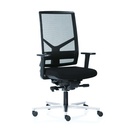
| Backrest too low or no upper back support | Upper back rounds, head moves forward | Chair with adequate backrest height; headrest for reclined tasks |
Setting up your workstation for neck pain
- Set the chair first. Sit back into the backrest so your upper body is supported. Everything else is positioned around this.
- Screen height. With your head level, your eyes should meet the screen near its top edge. Lower it if you wear varifocals or bifocals.
- Screen distance. About an arm's length. If you find yourself leaning in, increase text size rather than moving closer.
- Screen straight ahead. Put the screen you use most directly in front of you.
- Raise laptops. Use a stand with a separate keyboard and mouse. A laptop on its own can never be set up well for the neck.
- Use a headset. Never cradle a phone.
- Move often. Every 30 minutes, gently turn your head, tuck your chin, and roll your shoulders.
Equipment our physiotherapists often consider for neck pain
Products to discuss at your consultation
Lets you set the screen at exactly the right height and distance and adjust it with a fingertip, so you actually move it when your posture or task changes.
Holds two screens at matching height and angle in a shallow V, avoiding sustained head rotation to a side monitor.
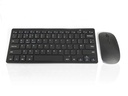
Raises the laptop screen to eye level at home, in the office or when travelling. Use with a separate keyboard and mouse, or choose the Laptop Pack which includes them.
A simple, stable riser with tool-free height adjustment for monitors that sit too low and can't be mounted on an arm.
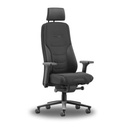
The HM380 Whiplash version has a longer, curved neckrest designed to let the neck muscles rest when you lean back, useful after whiplash or for persistent neck pain.
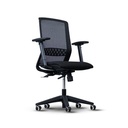
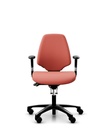
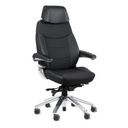
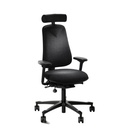
A fully adjustable chair with height-adjustable lumbar support and an optional headrest, supporting the upper back so the head doesn't drift forward.
Browse our monitor arms, sit-stand converters and ergonomic chairs.
Why the right product for neck pain is found in a consultation, not a basket
Every product above can help the right person, and none of them helps everyone. Neck pain rarely presents the same way twice: the side, the aggravating posture, your body size, the desk you actually work at and what your physio or consultant has told you all change the answer. Screen height depends on your seated eye height, your glasses and how many screens you use, and a headrest that suits one person pushes another's head forward. That is why the most reliable way to choose is to sit down with one of our physiotherapists or clinical ergonomists, recreate how you work, and test options side by side before you spend anything.
Beyond the desk
- Phones and tablets. Raise them towards eye level rather than dropping your head to them.
- Sleep. A pillow that keeps your neck in line with your spine, whether on your back or side, often helps morning stiffness.
- Eyes. Uncorrected vision makes people lean in. Screen users are entitled to an eye and eyesight test under Regulation 73.
- Stress. Neck and shoulder muscles are among the first to tighten under pressure. Breaks and movement help both.
For employers and H&S managers
If an employee reports neck pain or headaches linked to screen work, Regulation 72 treats that as a reason to review their workstation. A generic DSE checklist is rarely enough once symptoms are present. A detailed ergonomic assessment with one of our physiotherapists or clinical ergonomists gives you specific, defensible recommendations, and for complex or long-standing cases a workplace needs assessment looks at the whole role. Equipment is then matched to the person, not bought on guesswork.
Related reading
- How to set up your workstation in five minutes
- How to set up the perfect ergonomic workspace at home
- 10-minute workstation workout
Get your screen in the right place
Book a free showroom consultation in Dublin or Tipperary, or an online consultation, and we will set up screens, arms and chairs around how you actually work.
Frequently asked questions
How high should my monitor be to prevent neck pain?
With your head level, your eyes should meet the screen near its top edge, with the screen about an arm's length away. If you wear varifocal or bifocal glasses, a slightly lower screen usually works better.
Can a laptop cause neck pain?
Yes. Using a laptop on its own forces a choice between a screen that is too low and a keyboard that is too high. Raising the laptop on a stand and using a separate keyboard and mouse solves this.
Does a monitor arm help neck pain?
A monitor arm lets you position the screen at the correct height and distance and adjust it easily, which reduces forward head posture and neck rotation for many users.
Should my office chair have a headrest?
A headrest is useful when you recline, for example during calls or reading, and after neck injuries such as whiplash. When you are typing upright, your head should be balanced over your shoulders rather than pushed forward by a headrest.
Can poor posture cause headaches?
Sustained forward head posture can contribute to cervicogenic and tension-type headaches, which often start at the base of the skull. A sudden, severe headache or one with neurological symptoms needs urgent medical attention.
Neck pain is one of the most common complaints among screen workers, and it is one of the most responsive to workstation changes. Your head weighs roughly as much as a bowling ball, and every centimetre it drifts forward to read a low screen increases the work your neck muscles do to hold it up, hour after hour.
This article is general educational information written by the KOS clinical team. It is not a diagnosis or a substitute for advice from your GP, consultant or physiotherapist. If your symptoms are severe, worsening, or include any of the warning signs listed below, seek medical care first.
Why screen work affects the neck
Most desk-related neck pain is mechanical, meaning it comes from muscles, joints and discs being held in one position for too long rather than from a serious underlying condition. The most common pattern is forward head posture, sometimes called "tech neck": the chin pokes forward, the upper neck extends to keep the eyes level, and the lower neck and upper back round.
Over time this can contribute to stiffness, muscle pain across the top of the shoulders, tension-type headaches that start at the base of the skull, and in some people irritation of the cervical joints or discs.
| Pattern | How it feels | Typical desk driver |
|---|---|---|
| Muscular neck pain | Aching and tightness in the neck and across the top of the shoulders | Low screen, laptop use, long periods without moving |
| Cervicogenic headache | Headache starting at the base of the skull, often one-sided, linked to neck position | Sustained forward head posture; looking up at a high screen |
| Cervical joint or disc irritation | Stiffness, pain turning the head, sometimes pain into the shoulder blade | Twisting to a side monitor; cradling a phone |
| Nerve root irritation (cervical radiculopathy) | Pain, tingling or numbness spreading into the arm and hand | Often disc-related; needs clinical assessment |
Warning signs that need medical attention first
See your GP promptly if you notice:
- Pain, numbness or weakness spreading into the arm or hand
- Neck pain after a fall, collision or other injury
- Pain with fever, unexplained weight loss, or a history of cancer
- Severe pain at night that does not ease with changing position
Go to an emergency department or call 112 / 999 immediately if you have:
- Numbness or weakness in both arms or both legs, difficulty walking or loss of balance
- Sudden severe headache, or neck pain with vision changes, slurred speech or dizziness
The desk habits behind neck pain
| What we often see | Effect on the neck | What helps |
|---|---|---|
| Laptop flat on the desk | Head drops forward and down for hours | Laptop stand plus separate keyboard and mouse |
| Monitor too low or too far away | Head juts forward to read | Top of the screen at or slightly below eye level, about an arm's length away |
| Monitor too high | Upper neck extends; worse for varifocal wearers | Lower the screen so you read through the correct part of your lenses |
| Second screen off to one side | Sustained neck rotation to one side | Main screen straight ahead; dual screens angled in a shallow V |
| Reading paper documents flat | Repeated looking down and back up | Document holder between keyboard and screen |
| Phone cradled between ear and shoulder | Side-bending under load | Headset for calls |
| Backrest too low or no upper back support | Upper back rounds, head moves forward | Chair with adequate backrest height; headrest for reclined tasks |
Setting up your workstation for neck pain
- Set the chair first. Sit back into the backrest so your upper body is supported. Everything else is positioned around this.
- Screen height. With your head level, your eyes should meet the screen near its top edge. Lower it if you wear varifocals or bifocals.
- Screen distance. About an arm's length. If you find yourself leaning in, increase text size rather than moving closer.
- Screen straight ahead. Put the screen you use most directly in front of you.
- Raise laptops. Use a stand with a separate keyboard and mouse. A laptop on its own can never be set up well for the neck.
- Use a headset. Never cradle a phone.
- Move often. Every 30 minutes, gently turn your head, tuck your chin, and roll your shoulders.
Equipment our physiotherapists often consider for neck pain
Products to discuss at your consultation
Lets you set the screen at exactly the right height and distance and adjust it with a fingertip, so you actually move it when your posture or task changes.
Holds two screens at matching height and angle in a shallow V, avoiding sustained head rotation to a side monitor.
Raises the laptop screen to eye level at home, in the office or when travelling. Use with a separate keyboard and mouse, or choose the Laptop Pack which includes them.
A simple, stable riser with tool-free height adjustment for monitors that sit too low and can't be mounted on an arm.
The HM380 Whiplash version has a longer, curved neckrest designed to let the neck muscles rest when you lean back, useful after whiplash or for persistent neck pain.
A fully adjustable chair with height-adjustable lumbar support and an optional headrest, supporting the upper back so the head doesn't drift forward.
Browse our monitor arms, sit-stand converters and ergonomic chairs.
Why the right product for neck pain is found in a consultation, not a basket
Every product above can help the right person, and none of them helps everyone. Neck pain rarely presents the same way twice: the side, the aggravating posture, your body size, the desk you actually work at and what your physio or consultant has told you all change the answer. Screen height depends on your seated eye height, your glasses and how many screens you use, and a headrest that suits one person pushes another's head forward. That is why the most reliable way to choose is to sit down with one of our physiotherapists or clinical ergonomists, recreate how you work, and test options side by side before you spend anything.
Beyond the desk
- Phones and tablets. Raise them towards eye level rather than dropping your head to them.
- Sleep. A pillow that keeps your neck in line with your spine, whether on your back or side, often helps morning stiffness.
- Eyes. Uncorrected vision makes people lean in. Screen users are entitled to an eye and eyesight test under Regulation 73.
- Stress. Neck and shoulder muscles are among the first to tighten under pressure. Breaks and movement help both.
For employers and H&S managers
If an employee reports neck pain or headaches linked to screen work, Regulation 72 treats that as a reason to review their workstation. A generic DSE checklist is rarely enough once symptoms are present. A detailed ergonomic assessment with one of our physiotherapists or clinical ergonomists gives you specific, defensible recommendations, and for complex or long-standing cases a workplace needs assessment looks at the whole role. Equipment is then matched to the person, not bought on guesswork.
Related reading
- How to set up your workstation in five minutes
- How to set up the perfect ergonomic workspace at home
- 10-minute workstation workout
Get your screen in the right place
Book a free showroom consultation in Dublin or Tipperary, or an online consultation, and we will set up screens, arms and chairs around how you actually work.
Frequently asked questions
How high should my monitor be to prevent neck pain?
With your head level, your eyes should meet the screen near its top edge, with the screen about an arm's length away. If you wear varifocal or bifocal glasses, a slightly lower screen usually works better.
Can a laptop cause neck pain?
Yes. Using a laptop on its own forces a choice between a screen that is too low and a keyboard that is too high. Raising the laptop on a stand and using a separate keyboard and mouse solves this.
Does a monitor arm help neck pain?
A monitor arm lets you position the screen at the correct height and distance and adjust it easily, which reduces forward head posture and neck rotation for many users.
Should my office chair have a headrest?
A headrest is useful when you recline, for example during calls or reading, and after neck injuries such as whiplash. When you are typing upright, your head should be balanced over your shoulders rather than pushed forward by a headrest.
Can poor posture cause headaches?
Sustained forward head posture can contribute to cervicogenic and tension-type headaches, which often start at the base of the skull. A sudden, severe headache or one with neurological symptoms needs urgent medical attention.

 and then Add to Home Screen.