Shoulder pain in desk workers is often dismissed as tension. Frequently it is something more specific: irritation of the rotator cuff tendons, sometimes called shoulder impingement or subacromial pain. The culprit is rarely a single injury. It is usually a mouse that sits too far away, a desk that is too high, or armrests that keep the shoulders hitched up all day.
This article is general educational information written by the KOS clinical team. It is not a diagnosis or a substitute for advice from your GP, consultant or physiotherapist. If your symptoms are severe, worsening, or include any of the warning signs listed below, seek medical care first.
What is shoulder impingement?
The rotator cuff is a group of four muscles and tendons that hold the ball of the upper arm centred in the shoulder socket as the arm moves. Above them sits a bony arch (the acromion) and a fluid-filled sac (the subacromial bursa). When the tendons are overloaded or irritated, raising or reaching with the arm becomes painful.
Clinicians increasingly describe this as subacromial pain or rotator cuff related shoulder pain rather than "impingement", because the problem is usually tendon overload rather than something being physically pinched. For you, the practical message is the same: reduce the sustained and repeated load on the cuff, then rebuild its capacity.
| At a glance | |
|---|---|
| Typical symptoms | Ache on the outside of the upper arm or front of the shoulder; pain raising the arm to the side or overhead; pain lying on the affected side at night; weakness reaching |
| Common desk aggravators | Reaching sideways or forward to the mouse; elevated shoulders from a high desk or high armrests; unsupported forearms; rounded upper back |
| Related conditions | Rotator cuff tendinopathy, subacromial bursitis, partial or full cuff tears, frozen shoulder (which causes marked stiffness in all directions) |
| Usual management | Load modification, a progressive strengthening programme, pain relief as advised, sometimes injection; surgery for specific cases |
Warning signs that need medical attention first
See your GP promptly if you notice:
- Sudden weakness or inability to lift the arm after a fall or strain, which may indicate a tear
- A hot, red, swollen joint, or shoulder pain with fever
- Shoulder pain with numbness or tingling down the arm
- Stiffness that makes it hard to move the arm in any direction
Go to an emergency department or call 112 / 999 immediately if you have:
- Left shoulder or arm pain with chest pain, breathlessness, sweating or nausea, which can indicate a heart problem
How your workstation loads the shoulder
| What we often see | What it does to the rotator cuff | What helps |
|---|---|---|
| Mouse to the right of a full-size keyboard | Arm held out to the side and forward all day | Compact keyboard, or a pointing device centred in front of you |
| Desk too high for the chair | Shoulders shrug up to reach the keyboard | Raise the chair and support the feet, or lower the desk |
| Armrests too high | Pushes the shoulders up towards the ears | Armrests level with the desk, just touching the forearms |
| No forearm support | The shoulder holds the weight of the arm | Armrests or a desk-mounted forearm support |
| Keyboard and mouse too far forward | Arm reaches forward with the shoulder rolled | Bring devices close, elbows by the sides |
| Monitor off to one side | Sustained rotation of neck and upper back that affects shoulder mechanics | Screen directly in front |
Setting up your workstation for shoulder pain
- Elbows by your sides. Your upper arms should hang relaxed, with elbows roughly at 90 degrees and close to your body.
- Match chair and desk height. Forearms roughly horizontal at the keyboard with shoulders relaxed. If you have to raise the chair, add a footrest.
- Close the reach gap. A keyboard without a number pad lets the mouse sit where your hand naturally falls.
- Centre the pointing device if you can. A device in front of the keyboard removes the sideways reach entirely.
- Support the forearms. Set armrests level with the desk so they take the weight of the arm without lifting the shoulder.
- Screen in front, at eye level. Avoid twisting to a side monitor for most of the day.
Equipment our physiotherapists often consider for shoulder pain
Products to discuss at your consultation
Combines a keyboard and a centrally positioned pointing device, so there is no sideways reach for a mouse at all. A strong option when reaching is the main aggravator.
Sits in front of your existing keyboard and can be used with either hand, letting you share the load between shoulders.
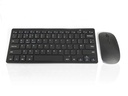
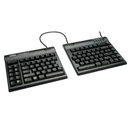
Removing the number pad brings the mouse roughly 8 to 10 cm closer to the body, a small change that noticeably reduces shoulder reach for many people.
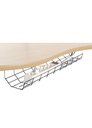
A padded support that attaches to the desk edge and carries the weight of the forearm while you type and use the mouse.
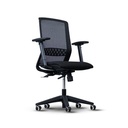
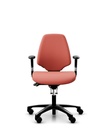
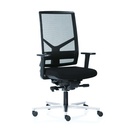
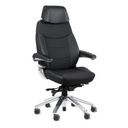
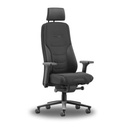
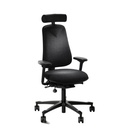
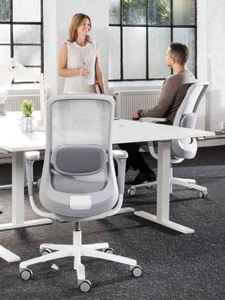
Fully adjustable armrests let the forearms rest level with the desk without hitching the shoulders, alongside good back support.
Places the screen directly in front at the correct height and distance, removing twisting and forward reaching to see.
See all MouseTrapper devices, monitor arms and ergonomic chairs.
Why the right product for shoulder pain is found in a consultation, not a basket
Every product above can help the right person, and none of them helps everyone. Shoulder pain rarely presents the same way twice: the side, the aggravating posture, your body size, the desk you actually work at and what your physio or consultant has told you all change the answer. Armrest height, keyboard width and whether a central device suits you all depend on your shoulder width and arm length. That is why the most reliable way to choose is to sit down with one of our physiotherapists or clinical ergonomists, recreate how you work, and test options side by side before you spend anything.
Helping your shoulder recover
- Keep moving within comfort. Complete rest tends to weaken the cuff. A physiotherapist-led strengthening programme is the core of treatment.
- Nights. Avoid sleeping on the painful side; a pillow under the affected arm can help when lying on your back or other side.
- Posture breaks. Short breaks to roll the shoulders and move the arms through comfortable range help counter hours of static loading. Try our 10-minute workstation workout.
For employers and H&S managers
If an employee reports shoulder pain, Regulation 72 treats that as a reason to review their workstation. A generic DSE checklist is rarely enough once symptoms are present. A detailed ergonomic assessment with one of our physiotherapists or clinical ergonomists gives you specific, defensible recommendations, and for complex or long-standing cases a workplace needs assessment looks at the whole role. Equipment is then matched to the person, not bought on guesswork.
Stop reaching for your mouse
Book a free showroom consultation in Dublin or Tipperary, or an online consultation, and try compact keyboards, central pointing devices and armrest setups with one of our physiotherapists.
Frequently asked questions
Can a computer mouse cause shoulder pain?
Yes. A mouse positioned to the side of a full-size keyboard, or too far forward, keeps the arm held away from the body for hours. That sustained load on the rotator cuff is a common contributor to shoulder pain in desk workers.
What is the best mouse for shoulder pain?
Devices that remove the reach help most, such as a central pointing device like the MouseTrapper Advance 2.0 or a keyboard with a built-in central trackpad like the MouseTrapper Alpha. A compact keyboard can also bring a conventional mouse closer.
Should my armrests touch the desk?
Ideally armrests sit level with the desk surface, so your forearms are supported without your shoulders lifting. Armrests that are too high push the shoulders up; too low and they don't help.
Is shoulder impingement the same as a rotator cuff tear?
No. Impingement or subacromial pain usually describes irritated or overloaded tendons. A tear is structural damage, often with sudden weakness after an injury. Your GP or physiotherapist can assess which applies.
How long does shoulder impingement take to improve?
Many people improve over weeks to a few months with load modification and a strengthening programme. Workstation changes help by reducing the load the shoulder carries every working hour.
Shoulder pain in desk workers is often dismissed as tension. Frequently it is something more specific: irritation of the rotator cuff tendons, sometimes called shoulder impingement or subacromial pain. The culprit is rarely a single injury. It is usually a mouse that sits too far away, a desk that is too high, or armrests that keep the shoulders hitched up all day.
This article is general educational information written by the KOS clinical team. It is not a diagnosis or a substitute for advice from your GP, consultant or physiotherapist. If your symptoms are severe, worsening, or include any of the warning signs listed below, seek medical care first.
What is shoulder impingement?
The rotator cuff is a group of four muscles and tendons that hold the ball of the upper arm centred in the shoulder socket as the arm moves. Above them sits a bony arch (the acromion) and a fluid-filled sac (the subacromial bursa). When the tendons are overloaded or irritated, raising or reaching with the arm becomes painful.
Clinicians increasingly describe this as subacromial pain or rotator cuff related shoulder pain rather than "impingement", because the problem is usually tendon overload rather than something being physically pinched. For you, the practical message is the same: reduce the sustained and repeated load on the cuff, then rebuild its capacity.
| At a glance | |
|---|---|
| Typical symptoms | Ache on the outside of the upper arm or front of the shoulder; pain raising the arm to the side or overhead; pain lying on the affected side at night; weakness reaching |
| Common desk aggravators | Reaching sideways or forward to the mouse; elevated shoulders from a high desk or high armrests; unsupported forearms; rounded upper back |
| Related conditions | Rotator cuff tendinopathy, subacromial bursitis, partial or full cuff tears, frozen shoulder (which causes marked stiffness in all directions) |
| Usual management | Load modification, a progressive strengthening programme, pain relief as advised, sometimes injection; surgery for specific cases |
Warning signs that need medical attention first
See your GP promptly if you notice:
- Sudden weakness or inability to lift the arm after a fall or strain, which may indicate a tear
- A hot, red, swollen joint, or shoulder pain with fever
- Shoulder pain with numbness or tingling down the arm
- Stiffness that makes it hard to move the arm in any direction
Go to an emergency department or call 112 / 999 immediately if you have:
- Left shoulder or arm pain with chest pain, breathlessness, sweating or nausea, which can indicate a heart problem
How your workstation loads the shoulder
| What we often see | What it does to the rotator cuff | What helps |
|---|---|---|
| Mouse to the right of a full-size keyboard | Arm held out to the side and forward all day | Compact keyboard, or a pointing device centred in front of you |
| Desk too high for the chair | Shoulders shrug up to reach the keyboard | Raise the chair and support the feet, or lower the desk |
| Armrests too high | Pushes the shoulders up towards the ears | Armrests level with the desk, just touching the forearms |
| No forearm support | The shoulder holds the weight of the arm | Armrests or a desk-mounted forearm support |
| Keyboard and mouse too far forward | Arm reaches forward with the shoulder rolled | Bring devices close, elbows by the sides |
| Monitor off to one side | Sustained rotation of neck and upper back that affects shoulder mechanics | Screen directly in front |
Setting up your workstation for shoulder pain
- Elbows by your sides. Your upper arms should hang relaxed, with elbows roughly at 90 degrees and close to your body.
- Match chair and desk height. Forearms roughly horizontal at the keyboard with shoulders relaxed. If you have to raise the chair, add a footrest.
- Close the reach gap. A keyboard without a number pad lets the mouse sit where your hand naturally falls.
- Centre the pointing device if you can. A device in front of the keyboard removes the sideways reach entirely.
- Support the forearms. Set armrests level with the desk so they take the weight of the arm without lifting the shoulder.
- Screen in front, at eye level. Avoid twisting to a side monitor for most of the day.
Equipment our physiotherapists often consider for shoulder pain
Products to discuss at your consultation
Combines a keyboard and a centrally positioned pointing device, so there is no sideways reach for a mouse at all. A strong option when reaching is the main aggravator.
Sits in front of your existing keyboard and can be used with either hand, letting you share the load between shoulders.
Removing the number pad brings the mouse roughly 8 to 10 cm closer to the body, a small change that noticeably reduces shoulder reach for many people.
A padded support that attaches to the desk edge and carries the weight of the forearm while you type and use the mouse.
Fully adjustable armrests let the forearms rest level with the desk without hitching the shoulders, alongside good back support.
Places the screen directly in front at the correct height and distance, removing twisting and forward reaching to see.
See all MouseTrapper devices, monitor arms and ergonomic chairs.
Why the right product for shoulder pain is found in a consultation, not a basket
Every product above can help the right person, and none of them helps everyone. Shoulder pain rarely presents the same way twice: the side, the aggravating posture, your body size, the desk you actually work at and what your physio or consultant has told you all change the answer. Armrest height, keyboard width and whether a central device suits you all depend on your shoulder width and arm length. That is why the most reliable way to choose is to sit down with one of our physiotherapists or clinical ergonomists, recreate how you work, and test options side by side before you spend anything.
Helping your shoulder recover
- Keep moving within comfort. Complete rest tends to weaken the cuff. A physiotherapist-led strengthening programme is the core of treatment.
- Nights. Avoid sleeping on the painful side; a pillow under the affected arm can help when lying on your back or other side.
- Posture breaks. Short breaks to roll the shoulders and move the arms through comfortable range help counter hours of static loading. Try our 10-minute workstation workout.
For employers and H&S managers
If an employee reports shoulder pain, Regulation 72 treats that as a reason to review their workstation. A generic DSE checklist is rarely enough once symptoms are present. A detailed ergonomic assessment with one of our physiotherapists or clinical ergonomists gives you specific, defensible recommendations, and for complex or long-standing cases a workplace needs assessment looks at the whole role. Equipment is then matched to the person, not bought on guesswork.
Stop reaching for your mouse
Book a free showroom consultation in Dublin or Tipperary, or an online consultation, and try compact keyboards, central pointing devices and armrest setups with one of our physiotherapists.
Frequently asked questions
Can a computer mouse cause shoulder pain?
Yes. A mouse positioned to the side of a full-size keyboard, or too far forward, keeps the arm held away from the body for hours. That sustained load on the rotator cuff is a common contributor to shoulder pain in desk workers.
What is the best mouse for shoulder pain?
Devices that remove the reach help most, such as a central pointing device like the MouseTrapper Advance 2.0 or a keyboard with a built-in central trackpad like the MouseTrapper Alpha. A compact keyboard can also bring a conventional mouse closer.
Should my armrests touch the desk?
Ideally armrests sit level with the desk surface, so your forearms are supported without your shoulders lifting. Armrests that are too high push the shoulders up; too low and they don't help.
Is shoulder impingement the same as a rotator cuff tear?
No. Impingement or subacromial pain usually describes irritated or overloaded tendons. A tear is structural damage, often with sudden weakness after an injury. Your GP or physiotherapist can assess which applies.
How long does shoulder impingement take to improve?
Many people improve over weeks to a few months with load modification and a strengthening programme. Workstation changes help by reducing the load the shoulder carries every working hour.

 and then Add to Home Screen.