Lower back pain is the single most common musculoskeletal complaint we see, and for most desk workers it is not caused by one bad lift or one bad chair. It builds from hours of static sitting, a seat that doesn't support the natural curve of the spine, and too little movement. That also means it responds well to the right combination of equipment and habits.
This article is general educational information written by the KOS clinical team. It is not a diagnosis or a substitute for advice from your GP, consultant or physiotherapist. If your symptoms are severe, worsening, or include any of the warning signs listed below, seek medical care first.
Understanding desk-related lower back pain
Most lower back pain is described as non-specific or mechanical: there is no single structural cause that can be pinpointed, and scans often don't explain the symptoms. That is reassuring rather than dismissive. It means serious disease is unlikely, and that movement, strength and reduced sustained load are the most effective tools.
Current clinical guidance, including from NICE, emphasises staying active, exercise and self-management over rest. Prolonged bed rest tends to slow recovery.
| Type | Typical features | Seating considerations |
|---|---|---|
| Non-specific mechanical pain | Ache across the lower back, stiffness after sitting, eases with movement | Lumbar support, regular position changes |
| Disc-related pain | Worse sitting and bending, may radiate to the buttock or leg | Open the hip angle and recline slightly; see our herniated disc guide in this series |
| Facet joint pain | Worse leaning back, standing still for long periods, twisting | Avoid excessive arching; neutral support |
| Sacroiliac joint pain | Pain low down to one side, near the dimple of the buttock | Even weight through both sitting bones; avoid crossing legs |
Warning signs that need medical attention first
See your GP promptly if you notice:
- Back pain with fever, unexplained weight loss, or a history of cancer
- Pain after significant trauma, or in people with osteoporosis
- Constant pain that is worse at night and not relieved by changing position
- Pain spreading down one or both legs with numbness or weakness
Go to an emergency department or call 112 / 999 immediately if you have:
- Numbness around the genitals, buttocks or inner thighs
- New difficulty passing urine, or loss of bladder or bowel control
- Weakness or numbness in both legs
What your chair should be doing for your lower back
An ergonomic chair isn't a label, it is a set of adjustments that match your body. For the lower back these matter most:
| Adjustment | Why it matters for the lower back | How to set it |
|---|---|---|
| Seat height | Too low tilts the pelvis back and flattens the lumbar curve | Hips level with or slightly above the knees, feet supported |
| Seat depth | Too deep stops you reaching the backrest, so you slump | Two to three fingers' gap between the seat edge and the back of the knee |
| Lumbar support height | Must sit in the hollow of your lower back, not on your pelvis or mid-back | Adjust backrest or lumbar height until it fills the curve |
| Backrest angle | Slight recline lets the backrest share body weight | A little behind upright for most tasks |
| Tilt mechanism | Movement while sitting keeps discs and muscles loaded and unloaded | Unlock the tilt and set tension so you can rock gently |
| Seat tilt | Forward tilt opens the hip angle and helps the natural curve | Useful for forward-working tasks; not for everyone |
Not sure whether your current chair meets the minimum standard? Try our two-minute DSE compliant chair checklist.
Movement is the missing piece
Even a perfect chair becomes a problem if you sit in it without moving for three hours. Spinal discs rely on movement to exchange fluid, and muscles fatigue when they hold one position. The best posture really is the next posture.
- Change position every 30 minutes. Stand for calls, walk to a colleague instead of emailing, refill water often.
- Use a sit-stand desk properly. Short, frequent changes beat long spells of standing. Start with a few minutes each hour and build up.
- Move in the chair. Unlock the tilt so the backrest moves with you.
- Build strength outside work. Walking, core and hip strengthening, and whatever activity you enjoy and will keep doing.
- Check the commute. Long drives in unsupportive seats often undo good work at the desk.
Equipment our physiotherapists often consider for lower back pain
Products to discuss at your consultation
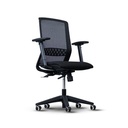
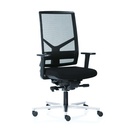
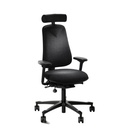
Adjustable lumbar pump, forward-tilt seat, and a multi-axis mechanism that supports you through upright, reclined and forward-leaning positions, so you can keep moving without losing support.
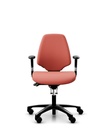
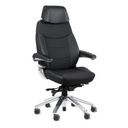
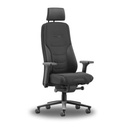
A sprung seat that distributes pressure and a backrest that adapts to the spine's curve. For larger users, the Malmstolen 7000 offers the same principles in a bigger frame.
Makes regular position changes effortless, with memory presets for your sitting and standing heights.
Adds sit-stand working to an existing fixed desk, with a built-in monitor arm, when replacing the desk isn't an option.
Opens the angle between trunk and thighs and encourages an upright spine, with a backrest for support. Best used for part of the day, alternating with a task chair.
A moulded back support that straps to any chair, useful for meeting rooms, hot desks and travel.
Explore our back care chairs, kneeling chairs, sit-stand desks and lumbar supports.
Why the right product for lower back pain is found in a consultation, not a basket
Every product above can help the right person, and none of them helps everyone. Lower back pain rarely presents the same way twice: the side, the aggravating posture, your body size, the desk you actually work at and what your physio or consultant has told you all change the answer. The chair that one person finds perfect can aggravate another person's back, depending on whether sitting, standing, bending or leaning back is what provokes their pain. That is why the most reliable way to choose is to sit down with one of our physiotherapists or clinical ergonomists, recreate how you work, and test options side by side before you spend anything.
For employers and H&S managers
If an employee reports lower back pain, Regulation 72 treats that as a reason to review their workstation. A generic DSE checklist is rarely enough once symptoms are present. A detailed ergonomic assessment with one of our physiotherapists or clinical ergonomists gives you specific, defensible recommendations, and for complex or long-standing cases a workplace needs assessment looks at the whole role. Equipment is then matched to the person, not bought on guesswork.
Related reading
- Preventing workplace pain: 10 tips to stay mobile and comfortable
- 10-minute workstation workout
- The complete guide to coccyx and tailbone pain
- Pregnancy back pain: a comprehensive guide
Find a chair that fits your back
Book a free showroom consultation in Dublin or Tipperary, or an online consultation, and trial back care chairs and sit-stand desks with one of our physiotherapists. Back care chairs come with a complimentary expert chair set-up.
Frequently asked questions
What is the best office chair for lower back pain?
The best chair is one that fits you: adjustable seat height and depth, lumbar support that sits in the hollow of your lower back, a backrest that reclines slightly, and a tilt mechanism that lets you move. Chairs such as the HM380 and Malmstolen 4000 are popular, but trying them is the only way to be sure.
Do standing desks help lower back pain?
For many people, yes, mainly because they make it easy to change position. Standing all day is not the goal. Alternating regularly between sitting and standing is what helps.
Where should lumbar support be on an office chair?
It should sit in the natural inward curve of your lower back, roughly at belt height for most people. Too low pushes on the pelvis; too high misses the curve entirely.
Should I rest if my lower back hurts?
For most non-specific lower back pain, staying active within the limits of your pain helps recovery more than bed rest. Seek medical advice if you notice any of the warning signs listed above.
Are kneeling chairs good for back pain?
They help some people by opening the hip angle and encouraging an upright spine, but they limit movement and put load through the shins and knees. They work best for part of the day alongside a supportive task chair.
Can I try back care chairs before buying?
Yes. Our Dublin and Tipperary showrooms let you trial chairs set up to your measurements, and we also offer online consultations.
Lower back pain is the single most common musculoskeletal complaint we see, and for most desk workers it is not caused by one bad lift or one bad chair. It builds from hours of static sitting, a seat that doesn't support the natural curve of the spine, and too little movement. That also means it responds well to the right combination of equipment and habits.
This article is general educational information written by the KOS clinical team. It is not a diagnosis or a substitute for advice from your GP, consultant or physiotherapist. If your symptoms are severe, worsening, or include any of the warning signs listed below, seek medical care first.
Understanding desk-related lower back pain
Most lower back pain is described as non-specific or mechanical: there is no single structural cause that can be pinpointed, and scans often don't explain the symptoms. That is reassuring rather than dismissive. It means serious disease is unlikely, and that movement, strength and reduced sustained load are the most effective tools.
Current clinical guidance, including from NICE, emphasises staying active, exercise and self-management over rest. Prolonged bed rest tends to slow recovery.
| Type | Typical features | Seating considerations |
|---|---|---|
| Non-specific mechanical pain | Ache across the lower back, stiffness after sitting, eases with movement | Lumbar support, regular position changes |
| Disc-related pain | Worse sitting and bending, may radiate to the buttock or leg | Open the hip angle and recline slightly; see our herniated disc guide in this series |
| Facet joint pain | Worse leaning back, standing still for long periods, twisting | Avoid excessive arching; neutral support |
| Sacroiliac joint pain | Pain low down to one side, near the dimple of the buttock | Even weight through both sitting bones; avoid crossing legs |
Warning signs that need medical attention first
See your GP promptly if you notice:
- Back pain with fever, unexplained weight loss, or a history of cancer
- Pain after significant trauma, or in people with osteoporosis
- Constant pain that is worse at night and not relieved by changing position
- Pain spreading down one or both legs with numbness or weakness
Go to an emergency department or call 112 / 999 immediately if you have:
- Numbness around the genitals, buttocks or inner thighs
- New difficulty passing urine, or loss of bladder or bowel control
- Weakness or numbness in both legs
What your chair should be doing for your lower back
An ergonomic chair isn't a label, it is a set of adjustments that match your body. For the lower back these matter most:
| Adjustment | Why it matters for the lower back | How to set it |
|---|---|---|
| Seat height | Too low tilts the pelvis back and flattens the lumbar curve | Hips level with or slightly above the knees, feet supported |
| Seat depth | Too deep stops you reaching the backrest, so you slump | Two to three fingers' gap between the seat edge and the back of the knee |
| Lumbar support height | Must sit in the hollow of your lower back, not on your pelvis or mid-back | Adjust backrest or lumbar height until it fills the curve |
| Backrest angle | Slight recline lets the backrest share body weight | A little behind upright for most tasks |
| Tilt mechanism | Movement while sitting keeps discs and muscles loaded and unloaded | Unlock the tilt and set tension so you can rock gently |
| Seat tilt | Forward tilt opens the hip angle and helps the natural curve | Useful for forward-working tasks; not for everyone |
Not sure whether your current chair meets the minimum standard? Try our two-minute DSE compliant chair checklist.
Movement is the missing piece
Even a perfect chair becomes a problem if you sit in it without moving for three hours. Spinal discs rely on movement to exchange fluid, and muscles fatigue when they hold one position. The best posture really is the next posture.
- Change position every 30 minutes. Stand for calls, walk to a colleague instead of emailing, refill water often.
- Use a sit-stand desk properly. Short, frequent changes beat long spells of standing. Start with a few minutes each hour and build up.
- Move in the chair. Unlock the tilt so the backrest moves with you.
- Build strength outside work. Walking, core and hip strengthening, and whatever activity you enjoy and will keep doing.
- Check the commute. Long drives in unsupportive seats often undo good work at the desk.
Equipment our physiotherapists often consider for lower back pain
Products to discuss at your consultation
Adjustable lumbar pump, forward-tilt seat, and a multi-axis mechanism that supports you through upright, reclined and forward-leaning positions, so you can keep moving without losing support.
A sprung seat that distributes pressure and a backrest that adapts to the spine's curve. For larger users, the Malmstolen 7000 offers the same principles in a bigger frame.
Makes regular position changes effortless, with memory presets for your sitting and standing heights.
Adds sit-stand working to an existing fixed desk, with a built-in monitor arm, when replacing the desk isn't an option.
Opens the angle between trunk and thighs and encourages an upright spine, with a backrest for support. Best used for part of the day, alternating with a task chair.
A moulded back support that straps to any chair, useful for meeting rooms, hot desks and travel.
Explore our back care chairs, kneeling chairs, sit-stand desks and lumbar supports.
Why the right product for lower back pain is found in a consultation, not a basket
Every product above can help the right person, and none of them helps everyone. Lower back pain rarely presents the same way twice: the side, the aggravating posture, your body size, the desk you actually work at and what your physio or consultant has told you all change the answer. The chair that one person finds perfect can aggravate another person's back, depending on whether sitting, standing, bending or leaning back is what provokes their pain. That is why the most reliable way to choose is to sit down with one of our physiotherapists or clinical ergonomists, recreate how you work, and test options side by side before you spend anything.
For employers and H&S managers
If an employee reports lower back pain, Regulation 72 treats that as a reason to review their workstation. A generic DSE checklist is rarely enough once symptoms are present. A detailed ergonomic assessment with one of our physiotherapists or clinical ergonomists gives you specific, defensible recommendations, and for complex or long-standing cases a workplace needs assessment looks at the whole role. Equipment is then matched to the person, not bought on guesswork.
Related reading
- Preventing workplace pain: 10 tips to stay mobile and comfortable
- 10-minute workstation workout
- The complete guide to coccyx and tailbone pain
- Pregnancy back pain: a comprehensive guide
Find a chair that fits your back
Book a free showroom consultation in Dublin or Tipperary, or an online consultation, and trial back care chairs and sit-stand desks with one of our physiotherapists. Back care chairs come with a complimentary expert chair set-up.
Frequently asked questions
What is the best office chair for lower back pain?
The best chair is one that fits you: adjustable seat height and depth, lumbar support that sits in the hollow of your lower back, a backrest that reclines slightly, and a tilt mechanism that lets you move. Chairs such as the HM380 and Malmstolen 4000 are popular, but trying them is the only way to be sure.
Do standing desks help lower back pain?
For many people, yes, mainly because they make it easy to change position. Standing all day is not the goal. Alternating regularly between sitting and standing is what helps.
Where should lumbar support be on an office chair?
It should sit in the natural inward curve of your lower back, roughly at belt height for most people. Too low pushes on the pelvis; too high misses the curve entirely.
Should I rest if my lower back hurts?
For most non-specific lower back pain, staying active within the limits of your pain helps recovery more than bed rest. Seek medical advice if you notice any of the warning signs listed above.
Are kneeling chairs good for back pain?
They help some people by opening the hip angle and encouraging an upright spine, but they limit movement and put load through the shins and knees. They work best for part of the day alongside a supportive task chair.
Can I try back care chairs before buying?
Yes. Our Dublin and Tipperary showrooms let you trial chairs set up to your measurements, and we also offer online consultations.

 and then Add to Home Screen.