When you are tasked with outfitting an office space or purchasing furniture for a remote workforce, the sheer volume of regulatory jargon can be overwhelming. Understanding what makes a workspace legally compliant versus what is simply a marketing gimmick is crucial for protecting your employees' health and your company's bottom line. Providing an aesthetically pleasing office is useless if the furniture leaves employees in pain, limits their functional productivity, or fails an official health and safety audit.
The Legal Baseline: Demystifying Irish Law and the HSA
A common point of confusion among employers is the role of the Health and Safety Authority (HSA). The HSA does not write the overarching workplace legislation; they are the regulatory body that enforces it, audits workplaces, and provides official guidance.
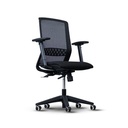
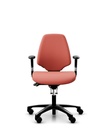
The actual law governing office setups in Ireland is the Safety, Health and Welfare at Work (General Application) Regulations 2007. Schedule 4 of this legislation dictates the absolute minimum legal requirements for employee workstations. Whether an employee is working in the corporate office or habitually working from home, their work chair must feature:
- Stability and Movement: The chair must utilize a five-star base with suitable casters for the floor type, allowing safe freedom of movement.
- Adjustable Seat Height: The height of the seat pan must be easily and independently adjustable.
- Independent Backrest Adjustments: The backrest must be adjustable in both height and tilt. This is a frequent failing point for cheaper models that feature fixed-height lumbar support.
- Footrests: If an employee requires a footrest to achieve a neutral, flat-footed posture, the employer is legally obligated to provide one.
Decoding "EN 1335" Standards: The Smart Way to Comply
If the law only mandates basic visual adjustments, why do procurement teams insist on the term "EN 1335"? While the Irish 2007 Regulations do not explicitly mandate EN 1335 by name, purchasing furniture that meets this European Standard is the only truly objective, impartial way to prove to an inspector that your equipment is safe, robust, and legally compliant.
The EN 1335 standard for office chairs is split into two critical parts:
- Part 1 (Dimensions & Adjustability): This categorizes chairs based on the percentage of the population they safely fit. Type C chairs have very limited adjustments and will not fit a diverse workforce. Type B chairs have a good range of adjustments and serve as a reliable baseline. Type A (or AX) chairs offer the widest range of ergonomic adjustments and are highly recommended for large populations.
- Part 2 (Safety & Durability): This involves rigorous physical testing. Machines repeatedly impact the chair, drop weights on the seat pan, and test its structural stability to ensure it won't tip over or shatter during years of 8-hour daily usage.
Beware of Deceptive Marketing: "Designed to EN 1335" does not mean "Certified to EN 1335". If a manufacturer cannot produce the official test certificate proving the chair passed both Part 1 and Part 2, do not risk your budget or employee health on it.
Navigating the Agile and Hot-Desking Danger Zone
Hot-desking introduces a unique, highly complex challenge: you are attempting to find a single set of furniture that safely fits every shape, size, and physical need within your organization. If your company buys cheap, limited-adjustment (Type C) chairs for an agile environment, you will likely find that a massive percentage of your workforce cannot sit comfortably, leading to a spike in individual reasonable accommodation requests.
Because of this, the HSA expects employers to provide a much higher specification of equipment in hot-desking areas compared to assigned seating. Furthermore, consider the mechanical strain: in a permanent seat, a chair is adjusted rarely. At a hot desk, that exact same chair might be adjusted multiple times a day by different users. Exceptional build quality (Type A) is paramount to prevent rapid equipment failure. Additionally, if the shared equipment is highly adjustable enough to meet everyone's needs safely, you avoid the administrative nightmare of conducting a brand-new ergonomic assessment every time someone changes desks.
Beyond the Chair: Desks, Monitors, and Pods
An ergonomic workspace is a complete functional ecosystem. Securing the right seating is only step one.
- Sit-Stand Desks: Any height-adjustable desk should meet the EN 527 standard, which ensures mechanical safety. It requires the desk to adjust from 650mm to 1250mm to suit the diverse working population and demands a dynamic load capacity of at least 120kg to safely support leaning body weight alongside heavy hardware.
- Monitors & Laptops: By law, monitors must be positioned so the user does not have to tilt their head. Built-in monitor stands rarely achieve this. In hot-desking spaces, dynamic monitor arms are essential to prevent manual handling hazards. Likewise, working directly off a laptop screen guarantees neck pain; aluminum laptop stands must be utilized to elevate the screen and prevent overheating.
- Acoustic Pods: Meeting pods are popular, but often poorly ventilated. Ensure any pod purchased has an air circulation rate of at least 20 liters per second. Furthermore, look for pods tested to the ISO 23351 standard, which provides an objective, scientific benchmark for soundproofing rather than relying on manufacturer claims.
Addressing Specific Workplace Risks
When managing a modern workforce, you must account for specialized scenarios. For instance, remote workers face unique domestic hazards. The most common remote workplace accident involves falling out of a chair that rolls too fast on hard wooden or tile floors. You should always supply remote chairs with interval brake casters (wheels with a rubber rim) to control movement. Furthermore, domestic work furniture should ideally comply with IS 419 fire retardancy standards for fabrics and foams.
Pregnancy also drastically alters an employee's ergonomic requirements. As the center of gravity shifts, standard chairs often cause lower back, hip, or tailbone pain. While an exceptionally adjustable Type A chair might suffice, many companies preemptively invest in specialized maternity chairs featuring deep seat-tilt adjustments to relieve pelvic pressure and accommodate shorter reach zones safely.
Review Your Workplace Strategy
Take action today: review your standard furniture range to ensure it meets minimum EN standards. Audit how your spaces are truly being used, identify your compliance gaps, and stop relying on subjective marketing claims. Build your workplace strategy on objective data and scientific safety standards.
When you are tasked with outfitting an office space or purchasing furniture for a remote workforce, the sheer volume of regulatory jargon can be overwhelming. Understanding what makes a workspace legally compliant versus what is simply a marketing gimmick is crucial for protecting your employees' health and your company's bottom line. Providing an aesthetically pleasing office is useless if the furniture leaves employees in pain, limits their functional productivity, or fails an official health and safety audit.
The Legal Baseline: Demystifying Irish Law and the HSA
A common point of confusion among employers is the role of the Health and Safety Authority (HSA). The HSA does not write the overarching workplace legislation; they are the regulatory body that enforces it, audits workplaces, and provides official guidance.
The actual law governing office setups in Ireland is the Safety, Health and Welfare at Work (General Application) Regulations 2007. Schedule 4 of this legislation dictates the absolute minimum legal requirements for employee workstations. Whether an employee is working in the corporate office or habitually working from home, their work chair must feature:
- Stability and Movement: The chair must utilize a five-star base with suitable casters for the floor type, allowing safe freedom of movement.
- Adjustable Seat Height: The height of the seat pan must be easily and independently adjustable.
- Independent Backrest Adjustments: The backrest must be adjustable in both height and tilt. This is a frequent failing point for cheaper models that feature fixed-height lumbar support.
- Footrests: If an employee requires a footrest to achieve a neutral, flat-footed posture, the employer is legally obligated to provide one.
Decoding "EN 1335" Standards: The Smart Way to Comply
If the law only mandates basic visual adjustments, why do procurement teams insist on the term "EN 1335"? While the Irish 2007 Regulations do not explicitly mandate EN 1335 by name, purchasing furniture that meets this European Standard is the only truly objective, impartial way to prove to an inspector that your equipment is safe, robust, and legally compliant.
The EN 1335 standard for office chairs is split into two critical parts:
- Part 1 (Dimensions & Adjustability): This categorizes chairs based on the percentage of the population they safely fit. Type C chairs have very limited adjustments and will not fit a diverse workforce. Type B chairs have a good range of adjustments and serve as a reliable baseline. Type A (or AX) chairs offer the widest range of ergonomic adjustments and are highly recommended for large populations.
- Part 2 (Safety & Durability): This involves rigorous physical testing. Machines repeatedly impact the chair, drop weights on the seat pan, and test its structural stability to ensure it won't tip over or shatter during years of 8-hour daily usage.
Beware of Deceptive Marketing: "Designed to EN 1335" does not mean "Certified to EN 1335". If a manufacturer cannot produce the official test certificate proving the chair passed both Part 1 and Part 2, do not risk your budget or employee health on it.
Navigating the Agile and Hot-Desking Danger Zone
Hot-desking introduces a unique, highly complex challenge: you are attempting to find a single set of furniture that safely fits every shape, size, and physical need within your organization. If your company buys cheap, limited-adjustment (Type C) chairs for an agile environment, you will likely find that a massive percentage of your workforce cannot sit comfortably, leading to a spike in individual reasonable accommodation requests.
Because of this, the HSA expects employers to provide a much higher specification of equipment in hot-desking areas compared to assigned seating. Furthermore, consider the mechanical strain: in a permanent seat, a chair is adjusted rarely. At a hot desk, that exact same chair might be adjusted multiple times a day by different users. Exceptional build quality (Type A) is paramount to prevent rapid equipment failure. Additionally, if the shared equipment is highly adjustable enough to meet everyone's needs safely, you avoid the administrative nightmare of conducting a brand-new ergonomic assessment every time someone changes desks.
Beyond the Chair: Desks, Monitors, and Pods
An ergonomic workspace is a complete functional ecosystem. Securing the right seating is only step one.
- Sit-Stand Desks: Any height-adjustable desk should meet the EN 527 standard, which ensures mechanical safety. It requires the desk to adjust from 650mm to 1250mm to suit the diverse working population and demands a dynamic load capacity of at least 120kg to safely support leaning body weight alongside heavy hardware.
- Monitors & Laptops: By law, monitors must be positioned so the user does not have to tilt their head. Built-in monitor stands rarely achieve this. In hot-desking spaces, dynamic monitor arms are essential to prevent manual handling hazards. Likewise, working directly off a laptop screen guarantees neck pain; aluminum laptop stands must be utilized to elevate the screen and prevent overheating.
- Acoustic Pods: Meeting pods are popular, but often poorly ventilated. Ensure any pod purchased has an air circulation rate of at least 20 liters per second. Furthermore, look for pods tested to the ISO 23351 standard, which provides an objective, scientific benchmark for soundproofing rather than relying on manufacturer claims.
Addressing Specific Workplace Risks
When managing a modern workforce, you must account for specialized scenarios. For instance, remote workers face unique domestic hazards. The most common remote workplace accident involves falling out of a chair that rolls too fast on hard wooden or tile floors. You should always supply remote chairs with interval brake casters (wheels with a rubber rim) to control movement. Furthermore, domestic work furniture should ideally comply with IS 419 fire retardancy standards for fabrics and foams.
Pregnancy also drastically alters an employee's ergonomic requirements. As the center of gravity shifts, standard chairs often cause lower back, hip, or tailbone pain. While an exceptionally adjustable Type A chair might suffice, many companies preemptively invest in specialized maternity chairs featuring deep seat-tilt adjustments to relieve pelvic pressure and accommodate shorter reach zones safely.
Review Your Workplace Strategy
Take action today: review your standard furniture range to ensure it meets minimum EN standards. Audit how your spaces are truly being used, identify your compliance gaps, and stop relying on subjective marketing claims. Build your workplace strategy on objective data and scientific safety standards.
Start writing here...

 and then Add to Home Screen.