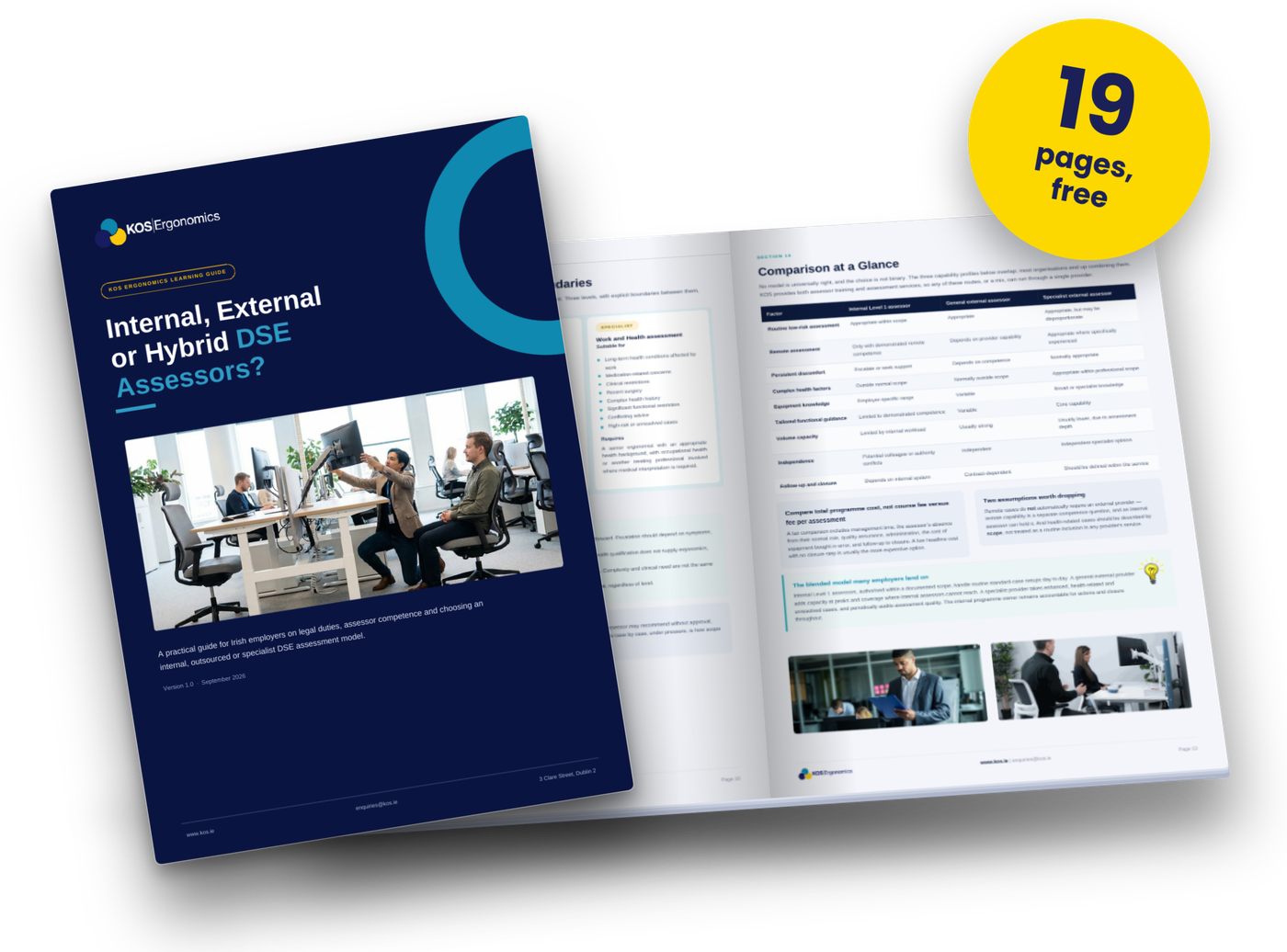
KOS Ergonomics learning guide
Internal, External or Hybrid DSE Assessors?
A practical guide for Irish employers on legal duties, assessor competence and choosing an internal, outsourced or specialist DSE assessment model.
- Free PDF guide
- 19 pages
- Updated September 2026
KOS Ergonomics learning guide
Internal, External or Hybrid DSE Assessors?
A practical guide for Irish employers on legal duties, assessor competence and choosing an internal, outsourced or specialist DSE assessment model.
- Free PDF guide
- 19 pages
- Updated September 2026
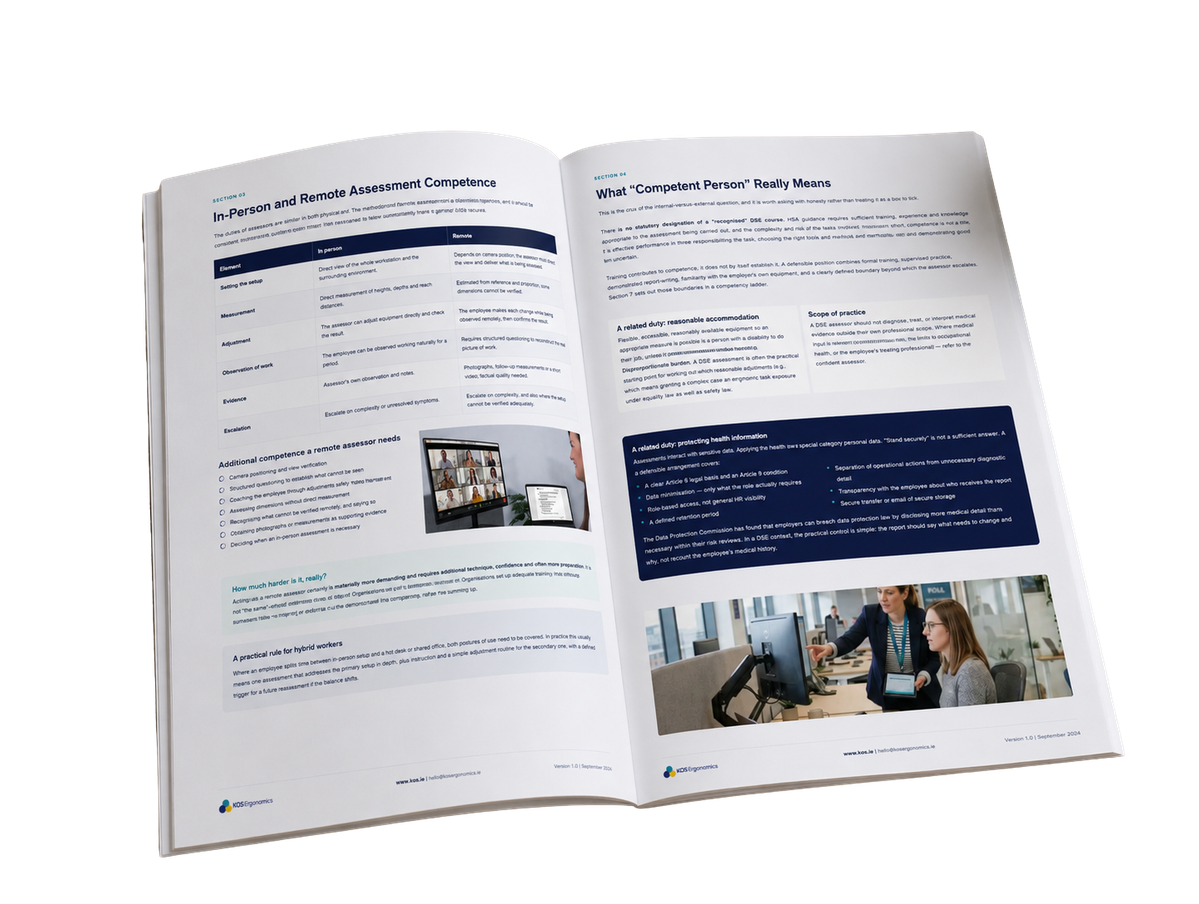
What's inside the guide
Most organisations know they need DSE assessments. Far fewer have decided what those assessments should deliver, what a thorough one involves, or what "competent" really means under the Regulations.
This guide compares three realistic options: an internally trained assessor, a general external assessor and a specialist. It helps you choose a model based on the outcomes you need, not guesswork.
You'll learn
- Which employees and work setups the DSE Regulations cover, including home and hybrid workers
- What "competent person" means in practice, and why training alone doesn't establish it
- How to set clear Level 1, Level 2 and specialist escalation boundaries
- The real differences between internal, general external and specialist assessors
- Ten questions that point your organisation to one of four programme models
15 sections, 19 pages
Written for HR, health and safety, and facilities teams working through their DSE obligations.
- 01Understanding DSE and who the law covers
- 02The legal framework in Ireland: the Act and the Regulations
- 03Why DSE risk management matters
- 04What a thorough assessment covers
- 05In-person and remote assessment competence
- 06What "competent person" really means
- 07Assessor levels and escalation boundaries
- 08Building competent internal DSE capability
- 09General and specialist external assessors
- 10Comparison at a glance
- 11Common mistakes and myths
- 12Building a practical DSE risk management programme
- 13Self-assessment: which model fits?
- 14Glossary of key terms
- 15Sources and how KOS can support your programme
What's inside the guide
Most organisations know they need DSE assessments. Far fewer have decided what those assessments should deliver, what a thorough one involves, or what "competent" really means under the Regulations.
This guide compares three realistic options: an internally trained assessor, a general external assessor and a specialist. It helps you choose a model based on the outcomes you need, not guesswork.
You'll learn
- Which employees and work setups the DSE Regulations cover, including home and hybrid workers
- What "competent person" means in practice, and why training alone doesn't establish it
- How to set clear Level 1, Level 2 and specialist escalation boundaries
- The real differences between internal, general external and specialist assessors
- Ten questions that point your organisation to one of four programme models
15 sections, 19 pages
Written for HR, health and safety, and facilities teams working through their DSE obligations.
- 01Understanding DSE and who the law covers
- 02The legal framework in Ireland: the Act and the Regulations
- 03Why DSE risk management matters
- 04What a thorough assessment covers
- 05In-person and remote assessment competence
- 06What "competent person" really means
- 07Assessor levels and escalation boundaries
- 08Building competent internal DSE capability
- 09General and specialist external assessors
- 10Comparison at a glance
- 11Common mistakes and myths
- 12Building a practical DSE risk management programme
- 13Self-assessment: which model fits?
- 14Glossary of key terms
- 15Sources and how KOS can support your programme
.

To install this Web App in your iPhone/iPad press  and then Add to Home Screen.